I love this creamy dressing. The dressing takes just minutes to put together and you can make it ahead of time as well and dress the cabbage and carrots when you’re ready to eat.
It’s slightly sweet from the maple syrup, and has a little bit of a bite from the apple cider vinegar and finely grated onion. And the dressing makes eating a good size serving of a cabbage (which is really good for you as it’s a cruciferous vegetable) a delicious experience.
When I first went gluten free, I experimented with a lot with different food combinations to try and come up with more exciting dishes to eat.
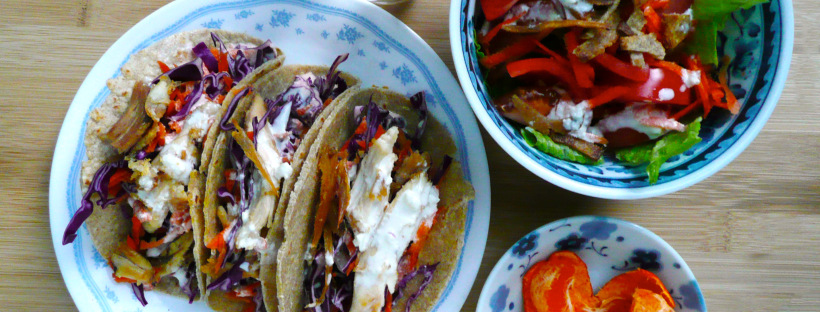
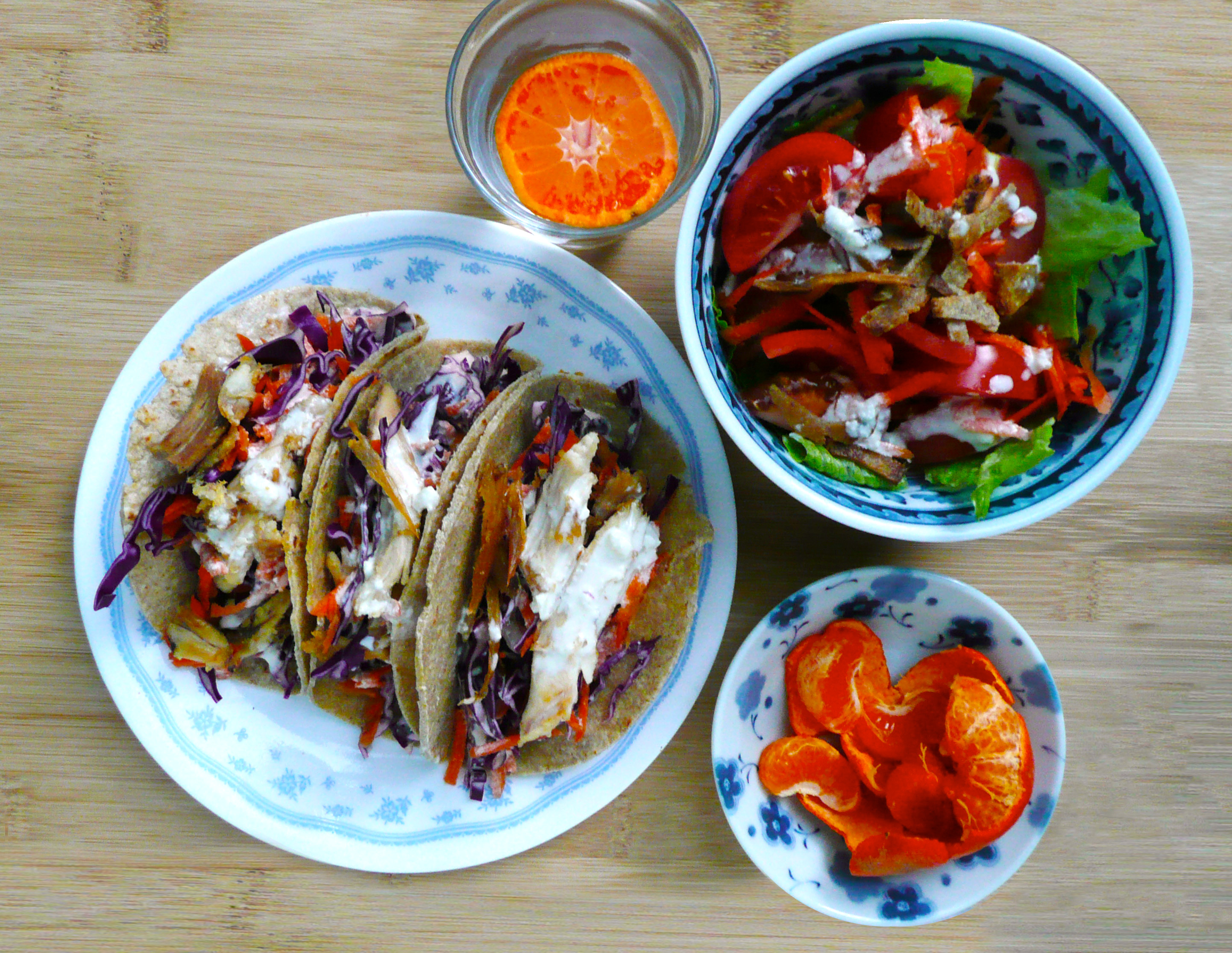
One of my first and favorite food combinations ones turned out to be chicken and cole slaw tacos.
I use homemade gluten free tortillas, top them with cole slaw and some leftover roasted chicken. If you’re vegan, you can use a vegan mayo and a meatless chicken subsitute (or crispy tofu would be good too).
You can also serve the dressing over a normal salad (like I did in the picture). I trimmed off the edges of the tortillas and pan fried them with a little oil until they were crispy and added them to salad as a crouton substitute.
I hope that you enjoy the dressing (and that it makes eating lots of vegetables more exciting!).
Happy Eating!
Cole Slaw Dressing
Makes 1 serving
Ingredients
1/2 tbsp finely grated white onion (I use the really small holes on my box grater for this)
3 tbsp mayo (I used an avocado oil mayo)
3/4 tsp apple cider vinegar
1- 1 1/4 tsp maple syrup
pinch of salt (to taste)
1 cup finely shredded cabbage and grated carrot mix
Instructions
Stir together the onion, mayo, vinegar, and maple syrup. Add salt to taste.
Pour over the cabbage and carrots and stir until well mixed. Serve.
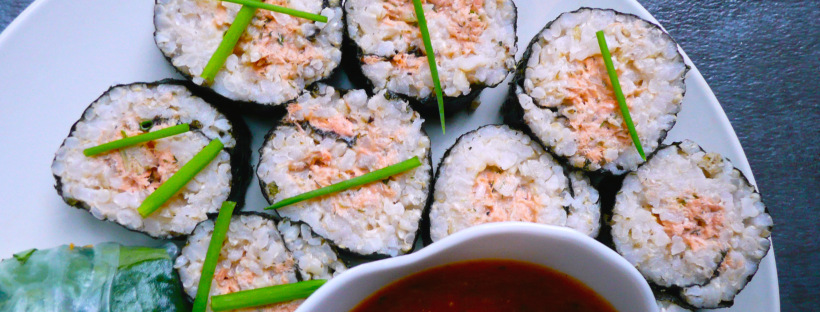
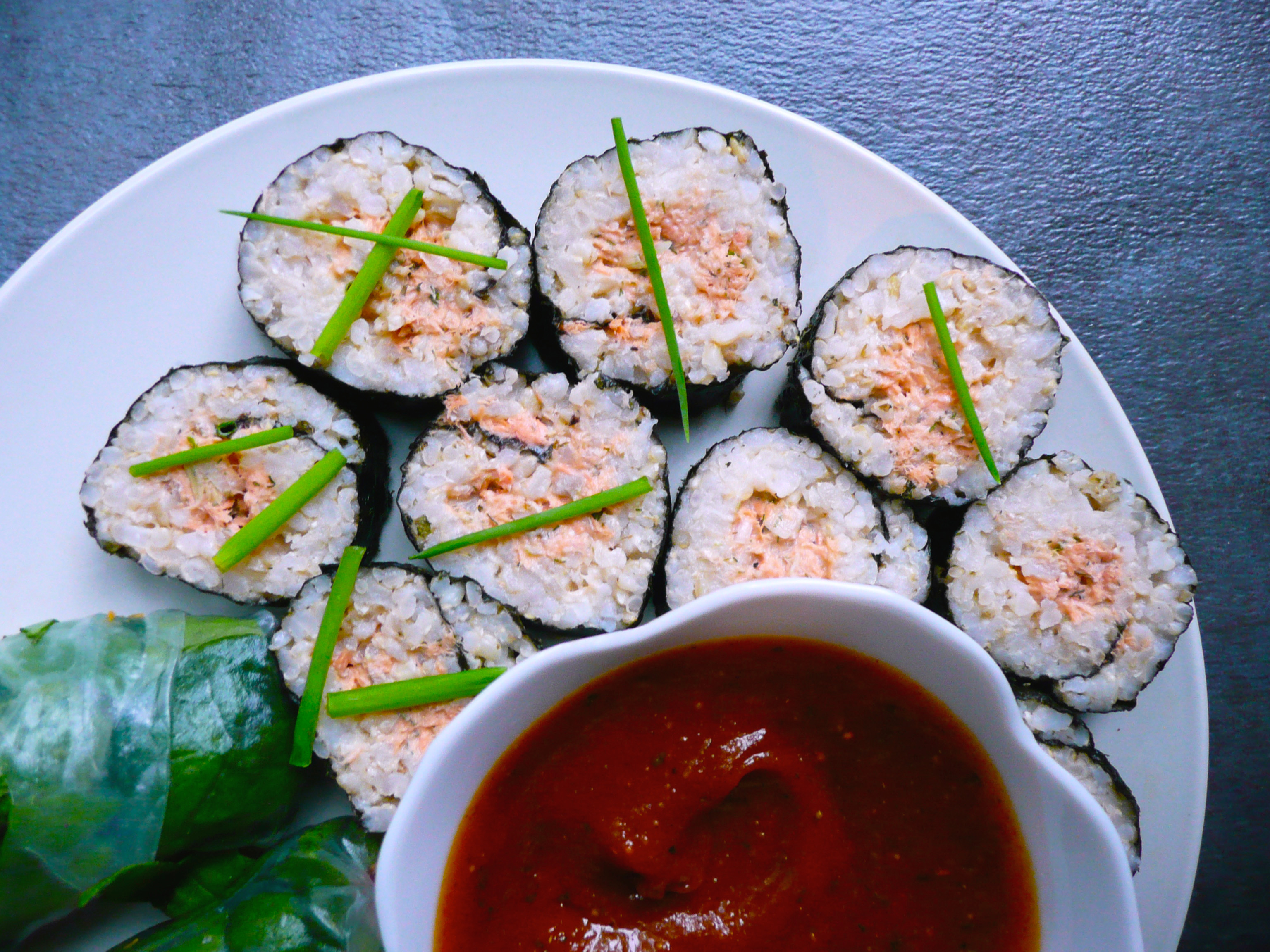
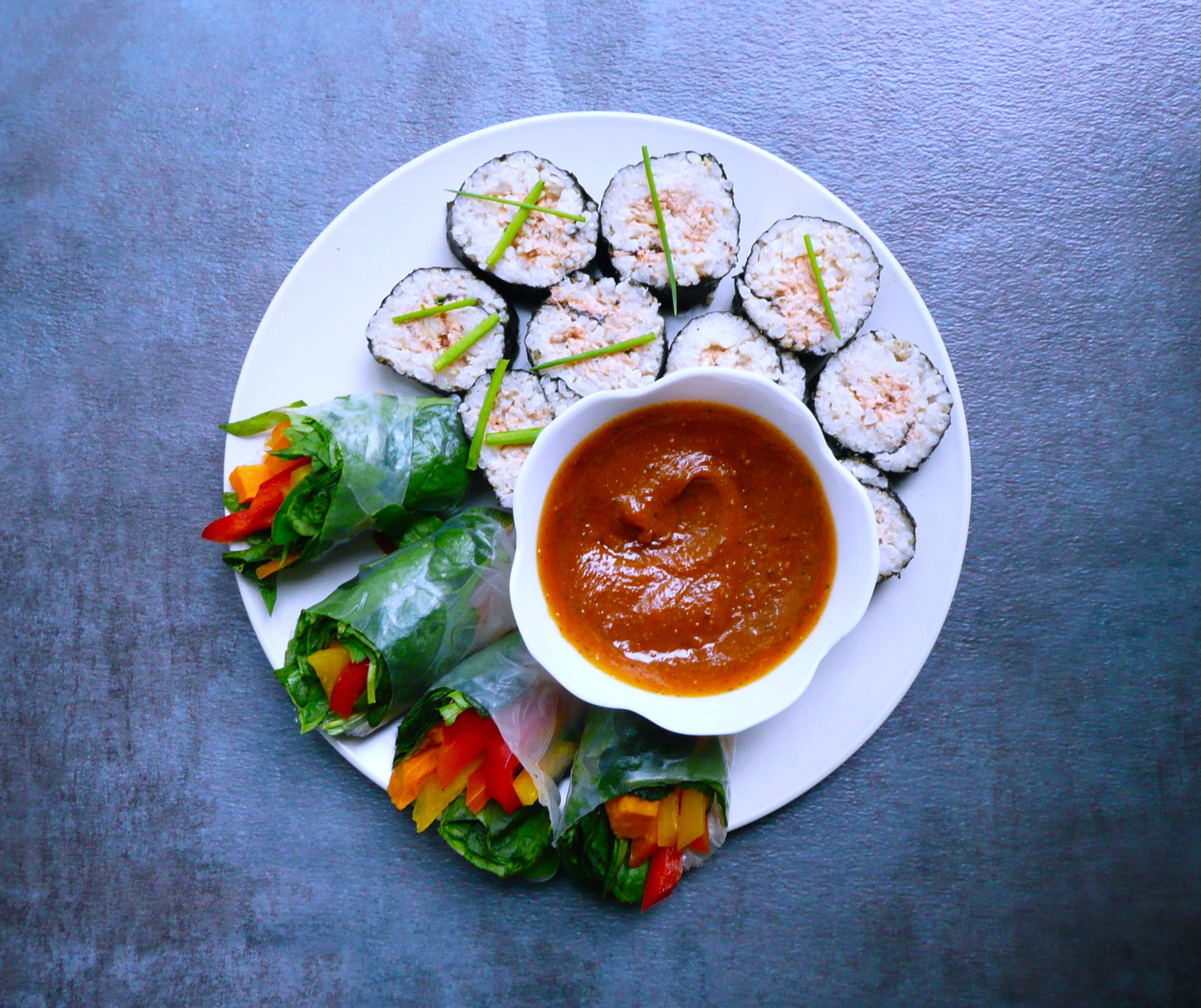
I love tuna salad, and this is a slightly fancier version but is still super simple to make. It’s perfect for a quick dinner, or an easy snack and you can use up your leftover brown rice or salmon to make this tasty dish.
Salmon Salad Sushi
Makes 8 pieces (2 snack size servings, or 1 serving for a hungry person)
Ingredients
1/3 cup cooked flaked salmon (canned salmon is fine too)
2 ½ tbsp. mayo (I used an avocado oil mayo)
1/8 tsp dijon mustard
2 ½ tsp finely chopped green onion
3 tsp lemon juice
tiny pinch of pepper
¼ tsp dried parsley
1/8 tsp granulated garlic
¼ tsp sea salt
1 ½ cups warm cooked brown rice (I just steam it for a few minutes in the rice cooker to warm it up if it was in the fridge)
1 sheet of nori
Instructions
1. Stir together the salmon with everything but the rice and nori.
2. Lay the nori sheet on a plastic wrap covered bamboo mat.
Wet your fingers, and spread the warm rice on the nori into a thin layer leaving about a ¾ inch of nori uncovered at the top of the sheet.
3. Spoon the salmon salad into a line at the bottom of the rice covered nori. Roll firmly into a sushi roll, and set in the fridge for 10 – 15 minutes to firm up. Cut into 8 slices and serve.
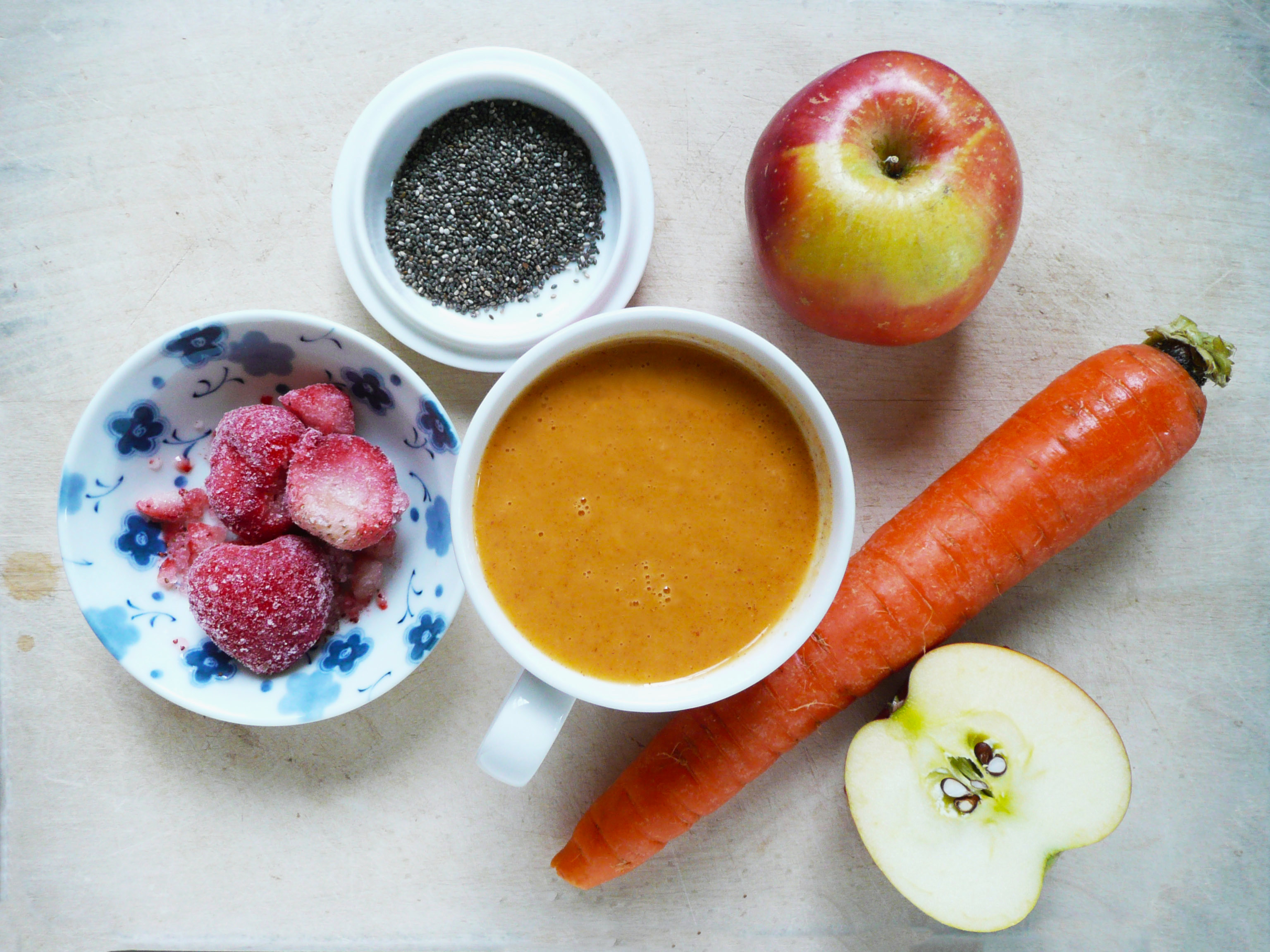
This super pretty smoothie looks like sunshine in a cup. It’s a snap to make and is not only delicious, but also full of healthy and anti-inflammatory ingredients.
Chia seeds provide omega-3 fatty acids, and avocado oil is a monounsaturated fat that helps to increase the absorption of the beta carotene from the carrots. The pineapple adds sweetness (if you use fresh pineapple then you get the benefit of an added anti-inflammatory enzyme called bromelain which helps with pain) and the strawberries add anthocyanins (the compounds that give the strawberries their color) which can help boost neurogenesis (helping your brain to produce new brain cells).
What I’ll sometimes do is pour one serving of the smoothie into a screw top jar (just an empty jar of coconut oil that I’ve washed and cleaned out) and keep it in the fridge to drink later in the day. It’s a filling smoothie and drinking this is usually satisfying enough that I can walk by the wall of chocolate candy at the grocery store and not crave any of it.
The apples, strawberries and pineapple give the smoothie a lovely sweetness, but if you want the smoothie a little sweeter, you can squeeze in a little honey to taste.
Good Morning Sunshine Smoothie
Makes 2 generous servings
Ingredients
1 1/2 fuji apples, roughly chopped
1 large carrot, but into 1/2 inch slices (about 1 cup)
1/4 cup canned pineapple + 1/4 cup of the pineapple juice*
8 strawberries (fresh or frozen) about a scant 1 cup
*If you don’t want to use canned pineapple, Trader Joe’s sells pineapple juice in a carton which tastes great. You can just add a few splashes of that to the smoothie instead of the canned pineapple for sweetness.
Instructions
Add all ingredients into a blender and blend until smooth. Pour into cups and serve.
If your blender isn’t that great at blending frozen things, you can let the strawberries thaw for 15-20 minutes before blending.
I hope that this colorful smoothie brings a little joy and sunshine to your day!
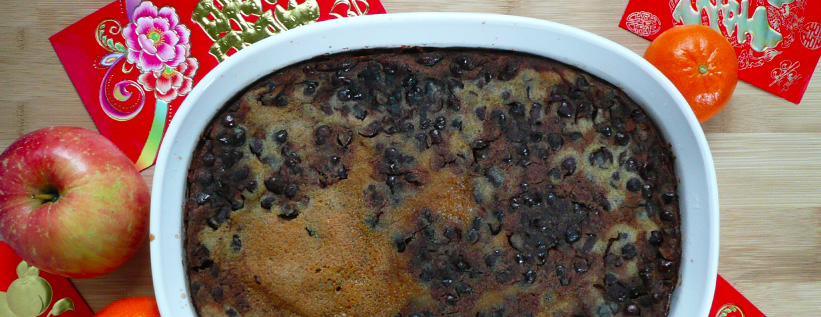
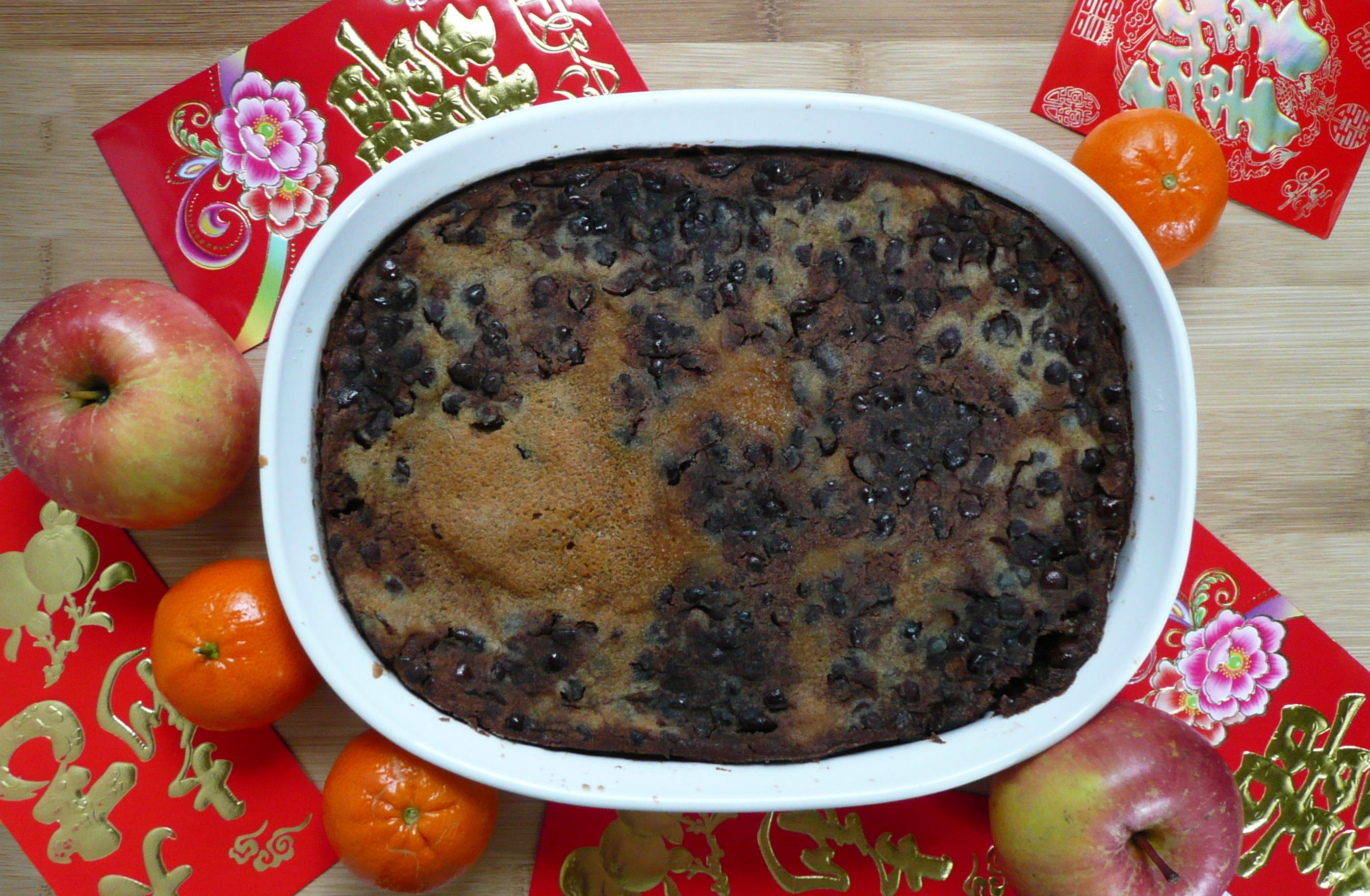
Nian Gao is a very traditional dish for Lunar New Year.
The word for “sticky” in Mandarin is a homonym for the Mandarin word for “year” so it’s considered good luck to eat nian gao, or “year cake” at Lunar New Year.
This recipe tastes identical to the version that my mom made when I was growing up, but is dairy and refined sugar free.
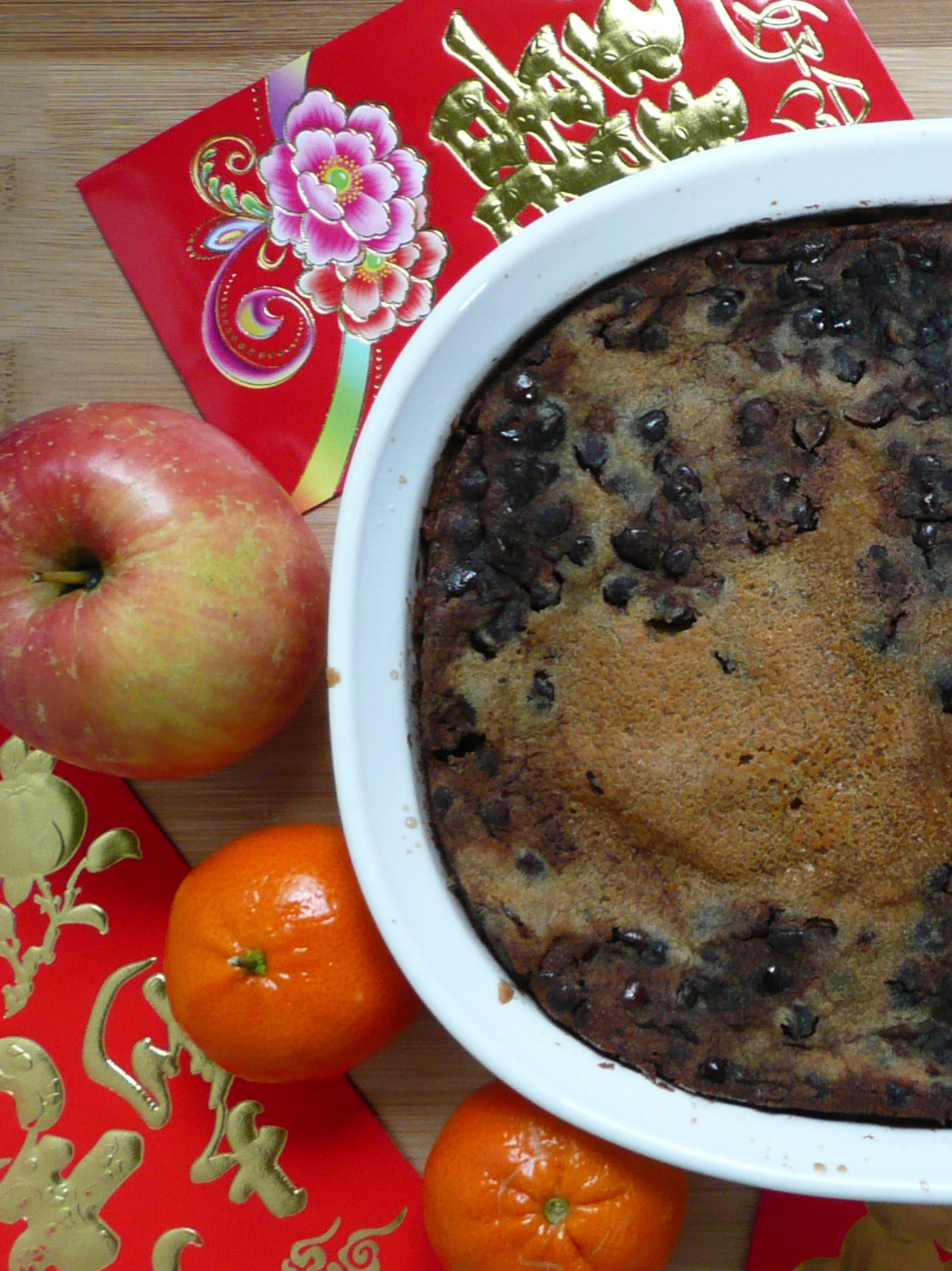
If you’ve never had nian gao before, think of it as basically a big baked mochi that’s slightly crisp on the outside and chewy in the middle with little pockets of sweet red bean filling.
Doesn’t that sound amazing?
This recipe is very simple to make. It’s basically pour everything into a bowl, stir and bake for a little more than an hour.
When I made a test batch I thought that it would be enough for 4-6 servings, but it’s so good that it was polished off very quickly. So, really, it will probably serve more like 2-3 people, so make extra if your family members are big eaters like mine are.
*You can replace the 1/2 egg with 1/2 tbsp ground flax seed and 3 tbsp hot water. Let the mixture stand for 10 minutes before using.
**There is the tiniest hint of coconut flavor from the coconut oil, but most people probably won’t notice. If you can’t stand coconut, you can used refined coconut oil instead. I like the Trader Joe’s one because it’s filtered to remove the coconut flavor instead of being bleached.
*** This recipe uses a lot of the red beans from the red bean soup, so if you’re planning on serving red bean soup for Lunar New Year, I would recommend making an extra batch of red bean soup just to use for the red bean filling in this Nian Gao recipe. You probably have some soup left over which you can send home with guests so it will all be eaten and people will go home happy.
Instructions
1. Preheat the oven to 350.
Grease your baking dish with either coconut oil, or a neutral flavored oil, and flour it with a few tbsp of sweet rice flour and set it to the side.
2. Stir together the 1/4 cup of maple syrup with the red beans. Use the back of a spoon to smush about 1/3 of the red beans against the side of the bowl. This took me about 20-30 seconds. You want some texture in the red bean paste when it’s baked, and some bits that are a little smooth.
3. In medium sized bowl, stir together the baking soda, sweet rice flour, melted coconut oil, egg (and the flax egg), 1/2 cup of maple syrup, and water. Stir until smooth.
4. I used a 8.5 x 11 inch oval casserole dish, but you can bake it in whatever size dish you have, just as long as the batter is an inch thick in the baking dish.
The nian gao batter plus the red bean filling is 4 1/3 cups in volume. If you want to see if your baking dish will work for this recipe, pour 4 1/3 cups of water into the baking dish and see if the layer of water is 1 inch deep. If it is, then that baking dish should work for this recipe.
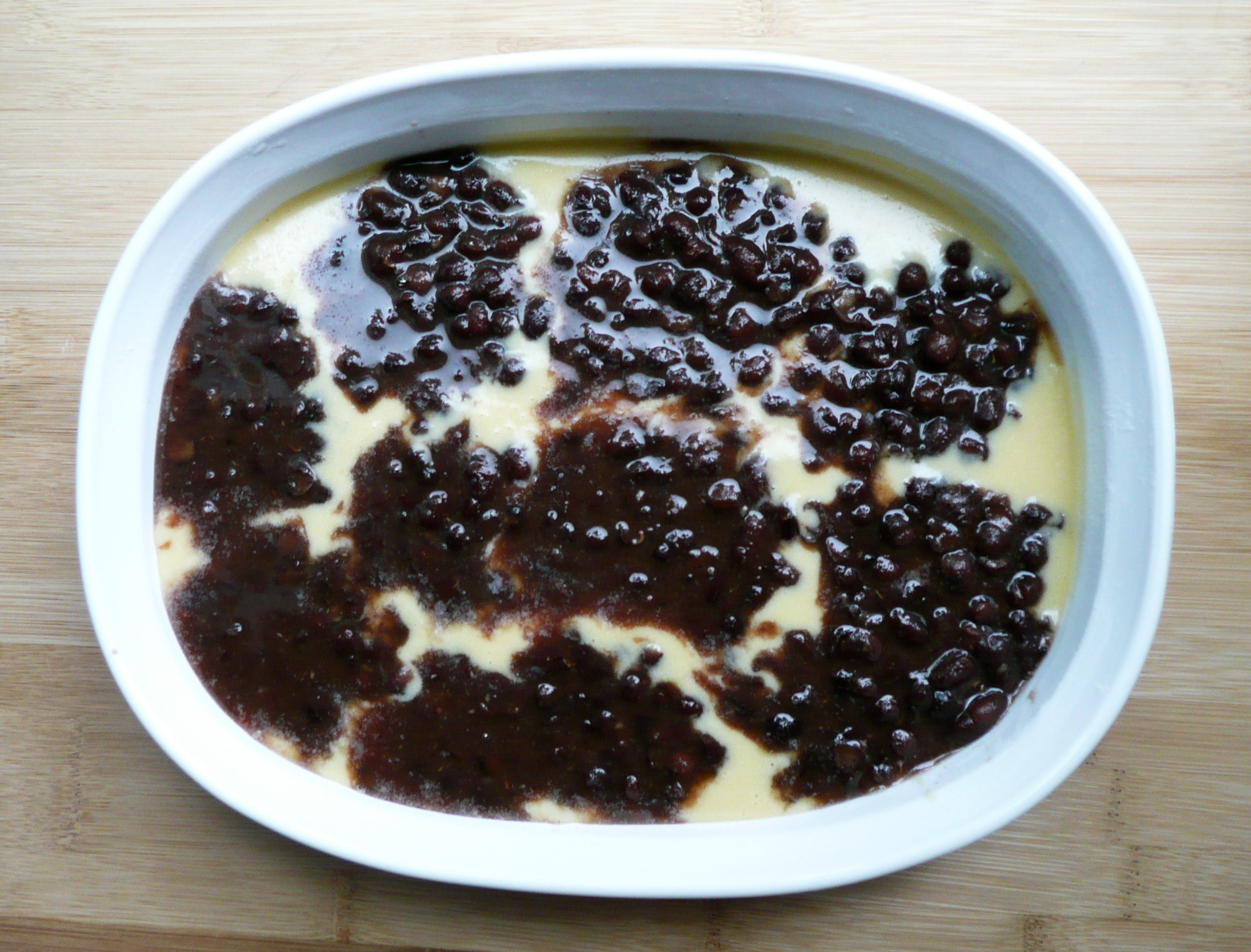
Scoop 1 1/2 cups of the nian gao batter into the baking dish so that the batter covers the entire bottom of the dish. Spoon over the red bean filling into puddles all over the batter, this doesn’t need to be perfectly even, in fact it’s better if it isn’t as the nian gao will hold together better if there isn’t a smooth layer of red bean filling separating the top and bottom of the batter.
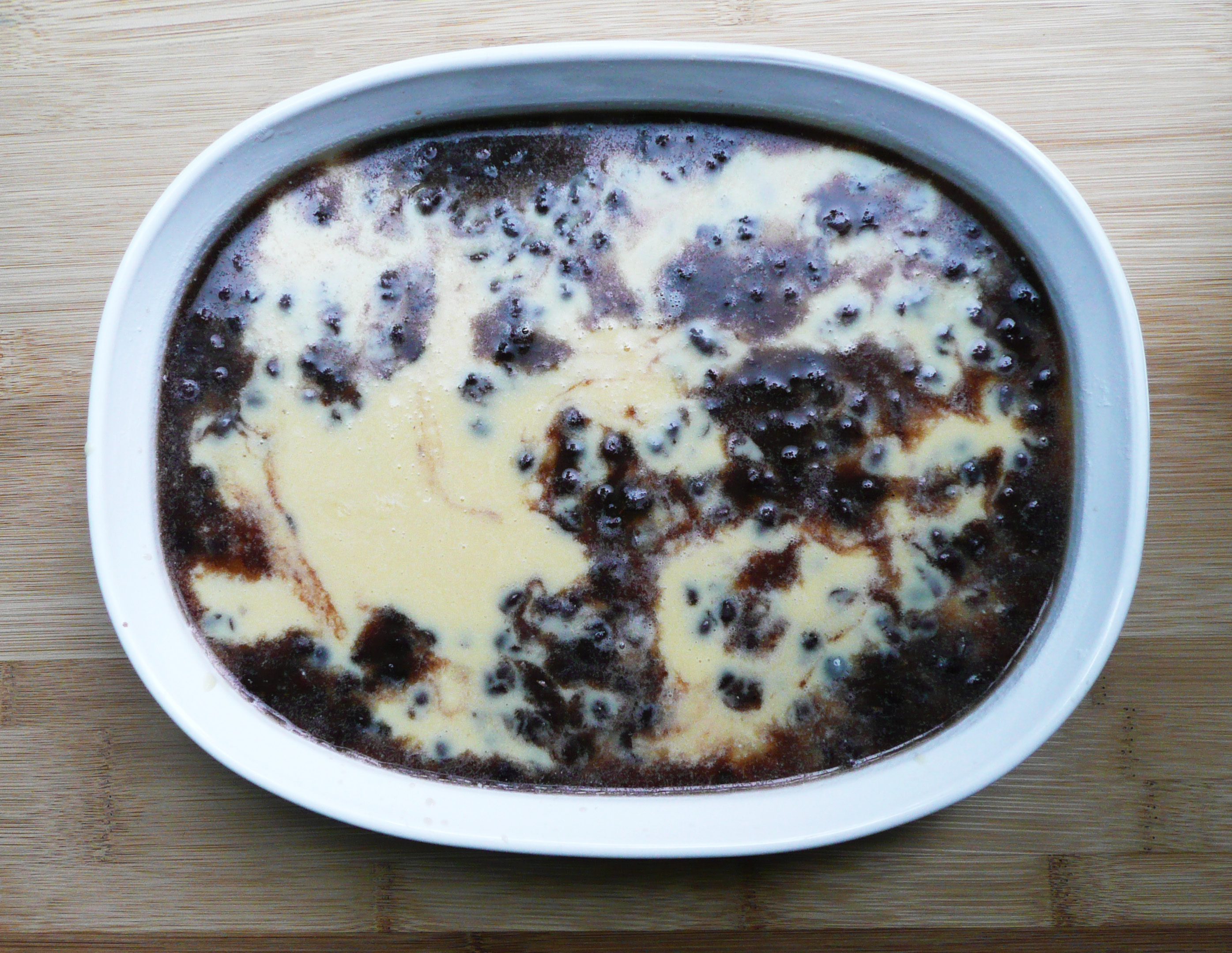
Spoon over the rest of the remaining batter and use the back of your spoon to slightly swirl the batter and red bean filling.
5. Bake at 350 for 1 hr and 15 minutes until golden brown on top and a toothpick comes out clean. It will be slightly crispy on top.
Allow the nian gao to cool to room temperature before cutting and serving.
If you don’t want to bother with the red bean filling, you can make the cake without it. I’ve only made it with the red bean filling, but if you make the nian gao without it, it will take less time to bake.
I would bake it at 350 and start checking to see if it’s done after 30 minutes. Other nian gao recipes that I’ve seen online without red bean filling seem to take about 45-60 minutes in the oven.
Lunar New Year is always an exciting time of year. It’s a time when we all get together and eat lots of amazing food.
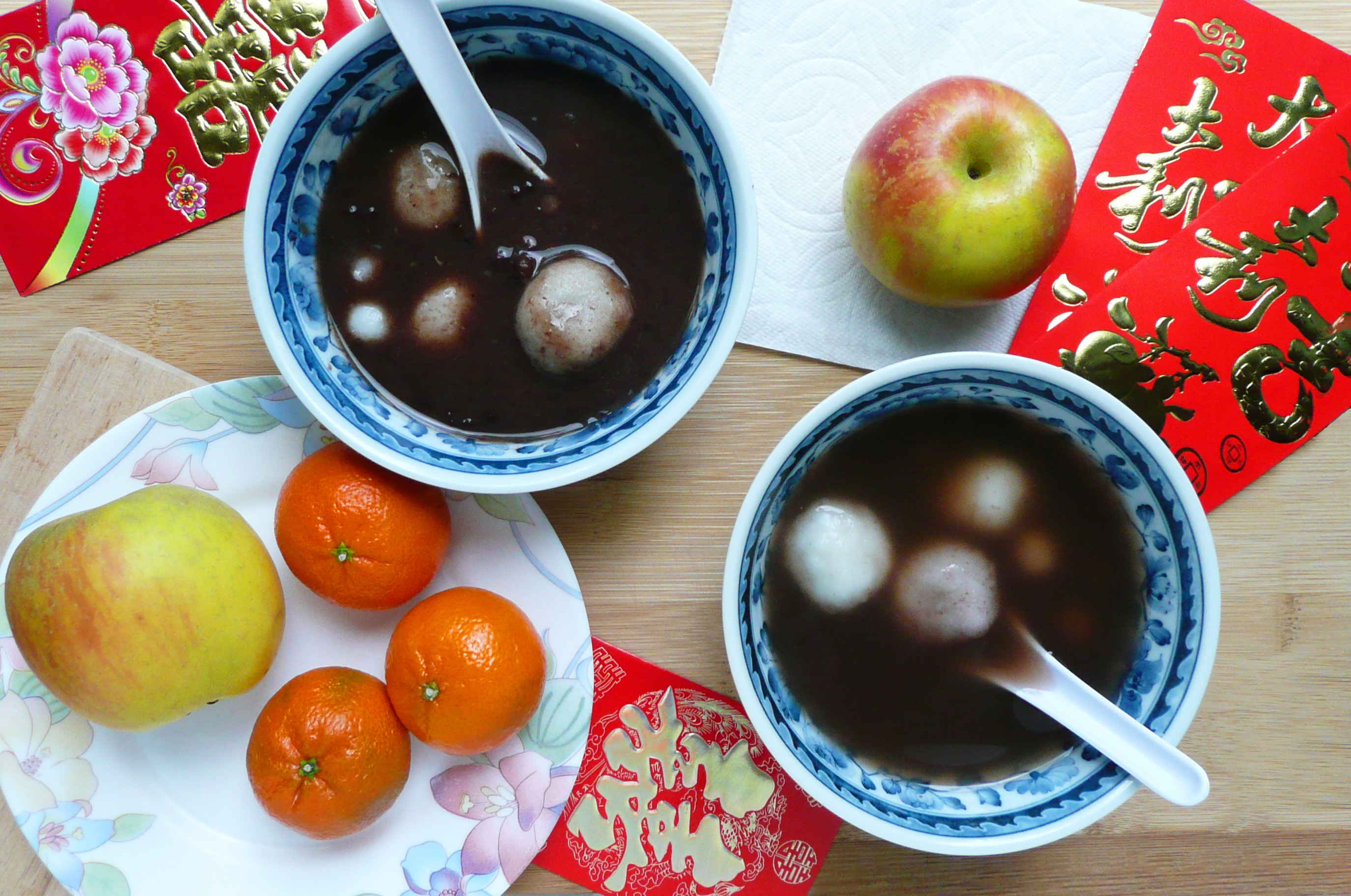
Every Asian culture celebrates Lunar New Year a little differently, but growing up Chinese American, we always made sure that we ate fish (for prosperity), noodles (for long life), oranges (for wealth), and tang yuan during the Lunar New Year feast.
“Tang” means soup, and “yuan” means round. “Yuan” also signifies a family gathering around a table, so this is why tang yuan are eaten at Lunar New Year.
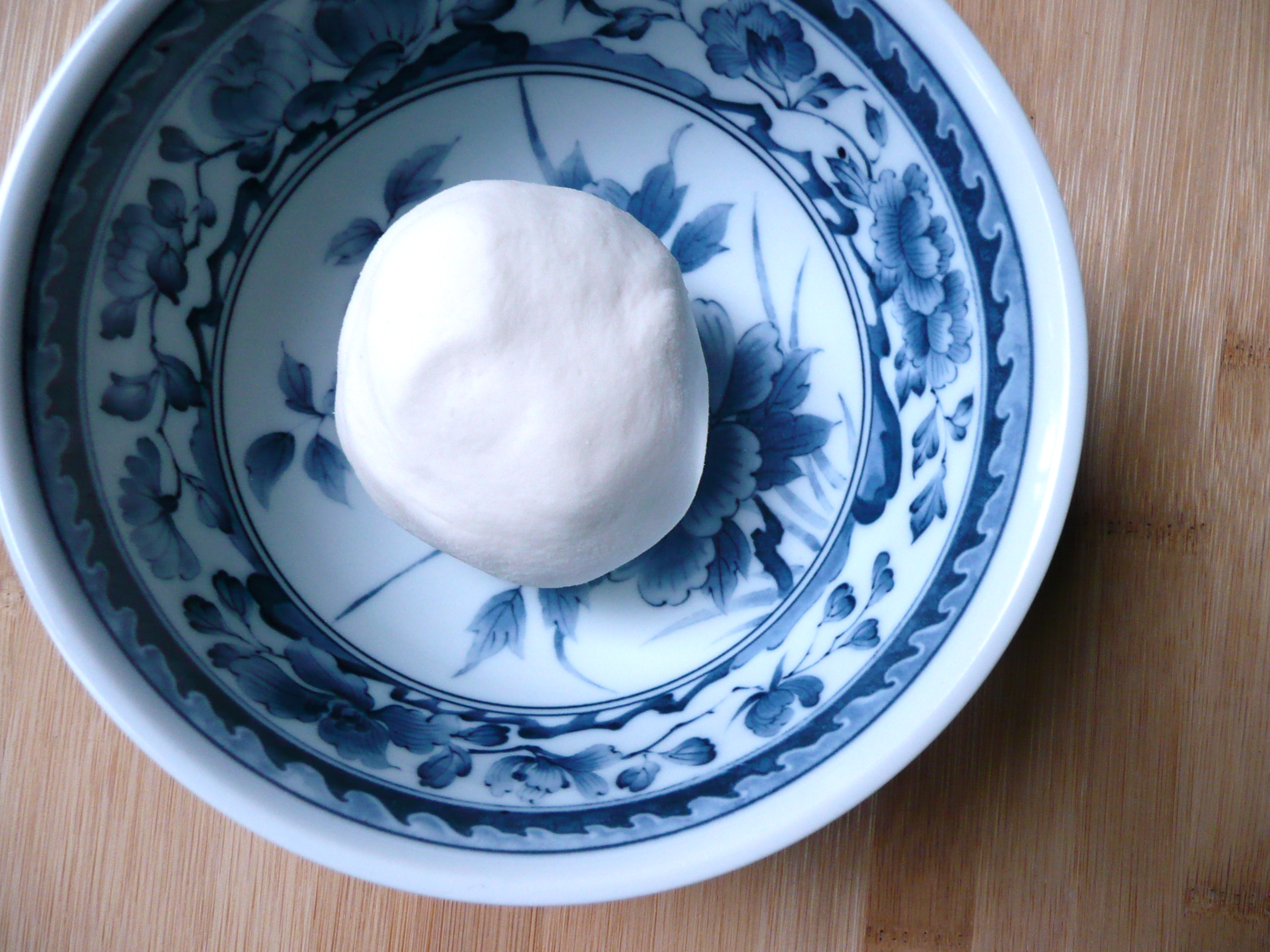
Tang yuan are chewy sweet rice balls. They can be filled with anything (there are peanut butter ones, taro ones, and black sesame ones too) but these are filled with sweet red bean paste, which is one of my favorite fillings.
These tang yuan are easy to make, and refined sugar free but still taste just like the ones I grew up eating.
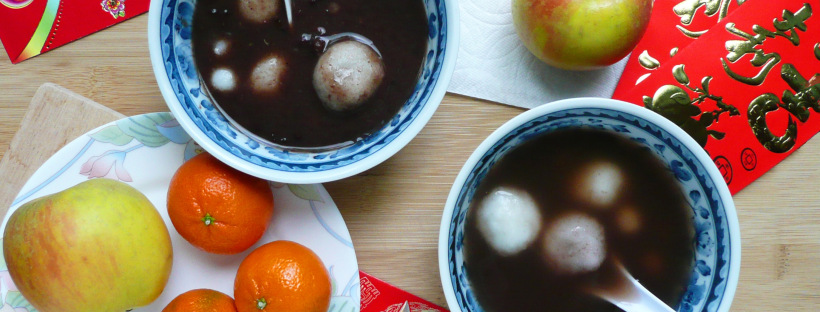
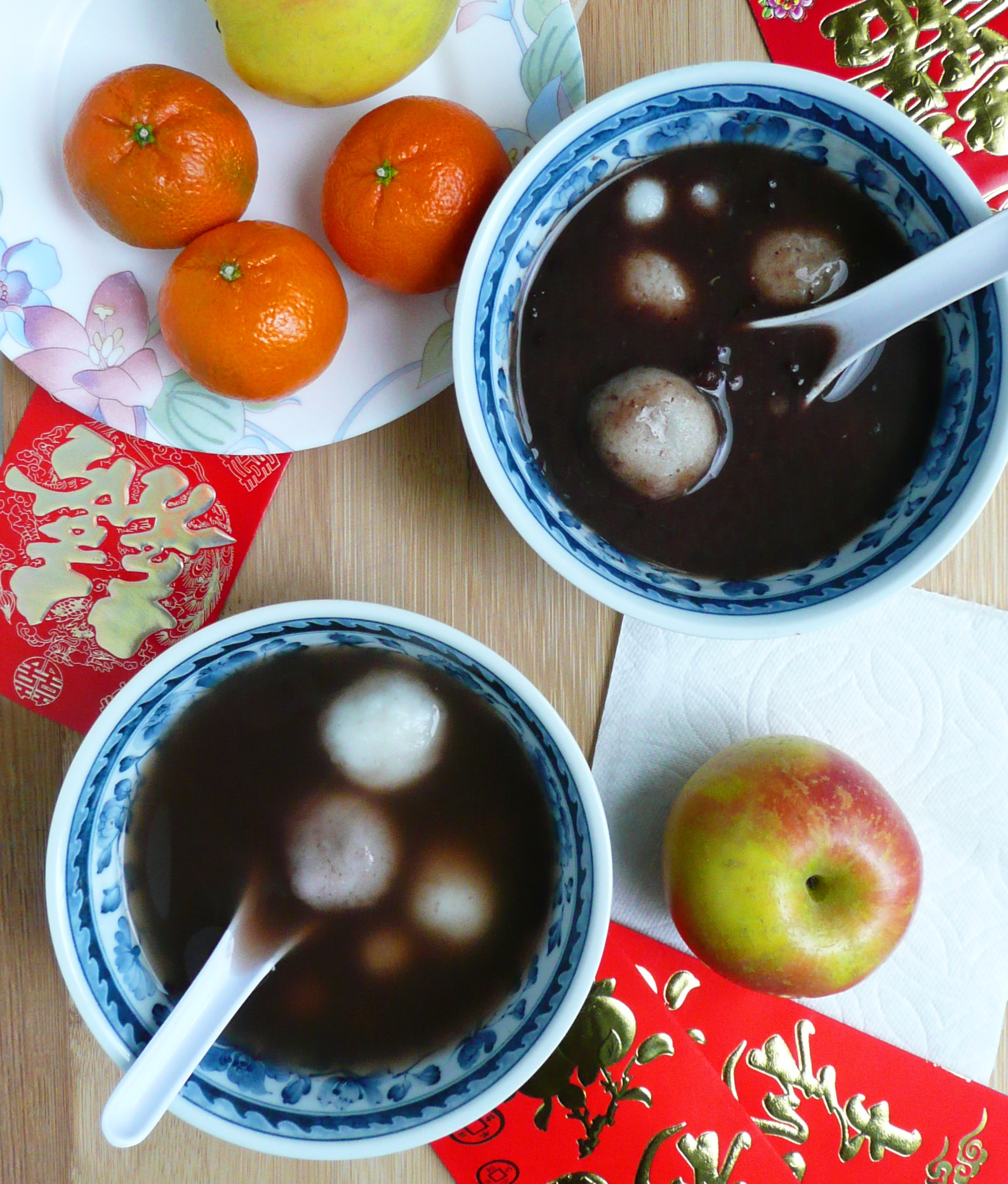
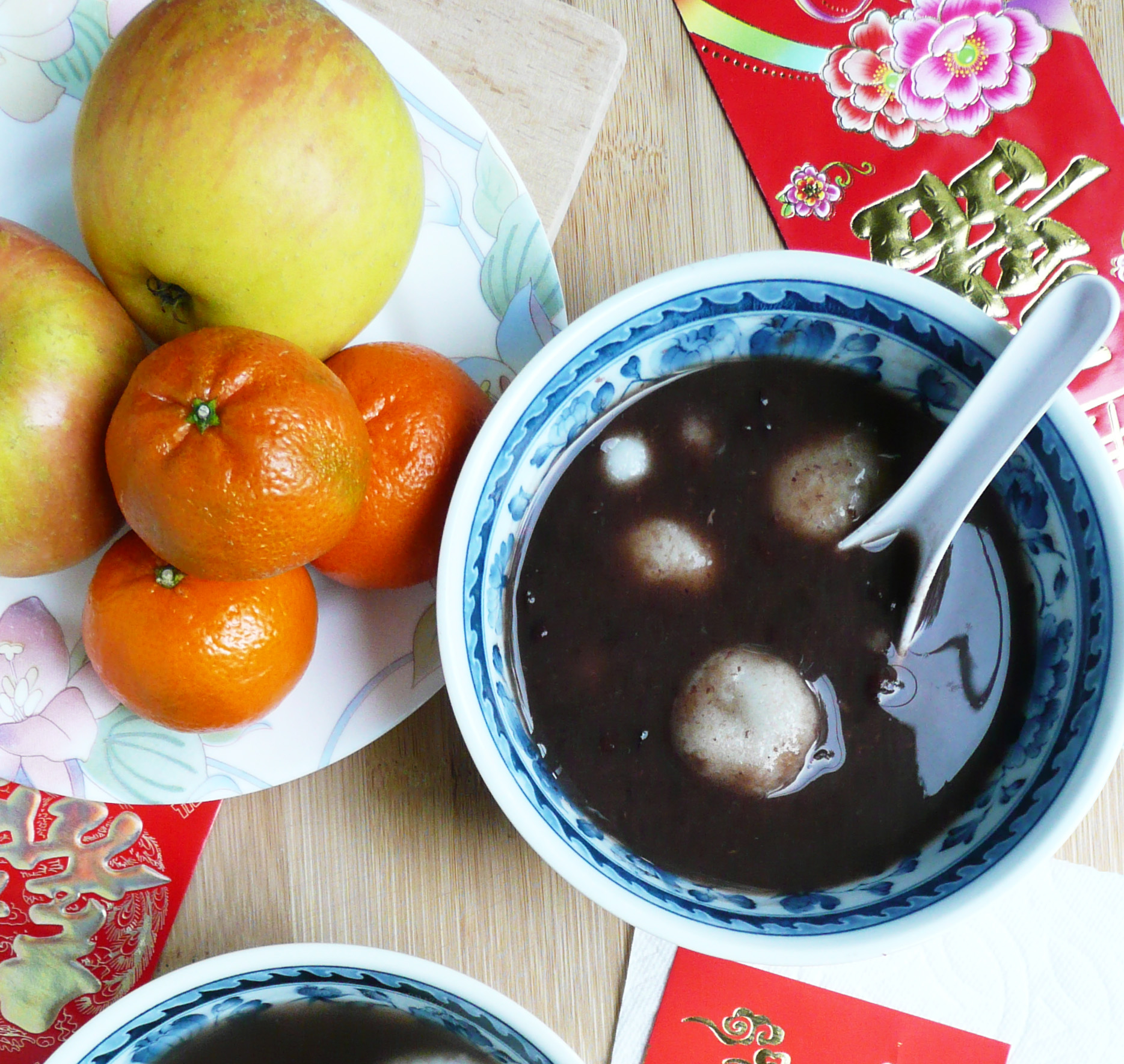
My family eats them with red bean soup, and this is the perfect thing to warm you right up during cold weather that we’re having.
I hope that you eat these tang yuan surrounded by lots of loved ones this Lunar New Year.
Tang Yuan (Sweet Rice Balls with Red Bean Filling)
1/2 cup sweet rice flour – 90 g (I used the Koda Farms Mochiko Sweet Rice Flour)***
1/4 cup warm water – 60 g
* 3 – 4 Tang Yuan per person should be ok if you’re eating a big meal for Lunar New Year, but my family usually eat a lot of them. Some people want 8 tang yuan in their bowl, some want 5, so it’s a good idea to make some extra ones just in case. This recipe can easily be doubled or tripled if need be, and it’s nice to have some extra tang yuan on hand in the winter months when you want a sweet warm snack.
**Make the red bean soup first, then use those some of those red beans in this recipe. drain about 1 cup of beans and liquid before you measure the 1/2 cup. You want the 1/2 of beans to be almost all beans with very little liquid. Press the red beans lightly with the back of a spoon while the red beans are in a sieve so that you get as much excess liquid out of the beans as possible. You can save the liquid and add it back into the red bean soup, or keep it to the side to and eat it with a drizzle of maple syrup if you don’t want to make the red bean soup thinner.
*** I recommend weighing the sweet rice flour if possible for the best results.
Instructions
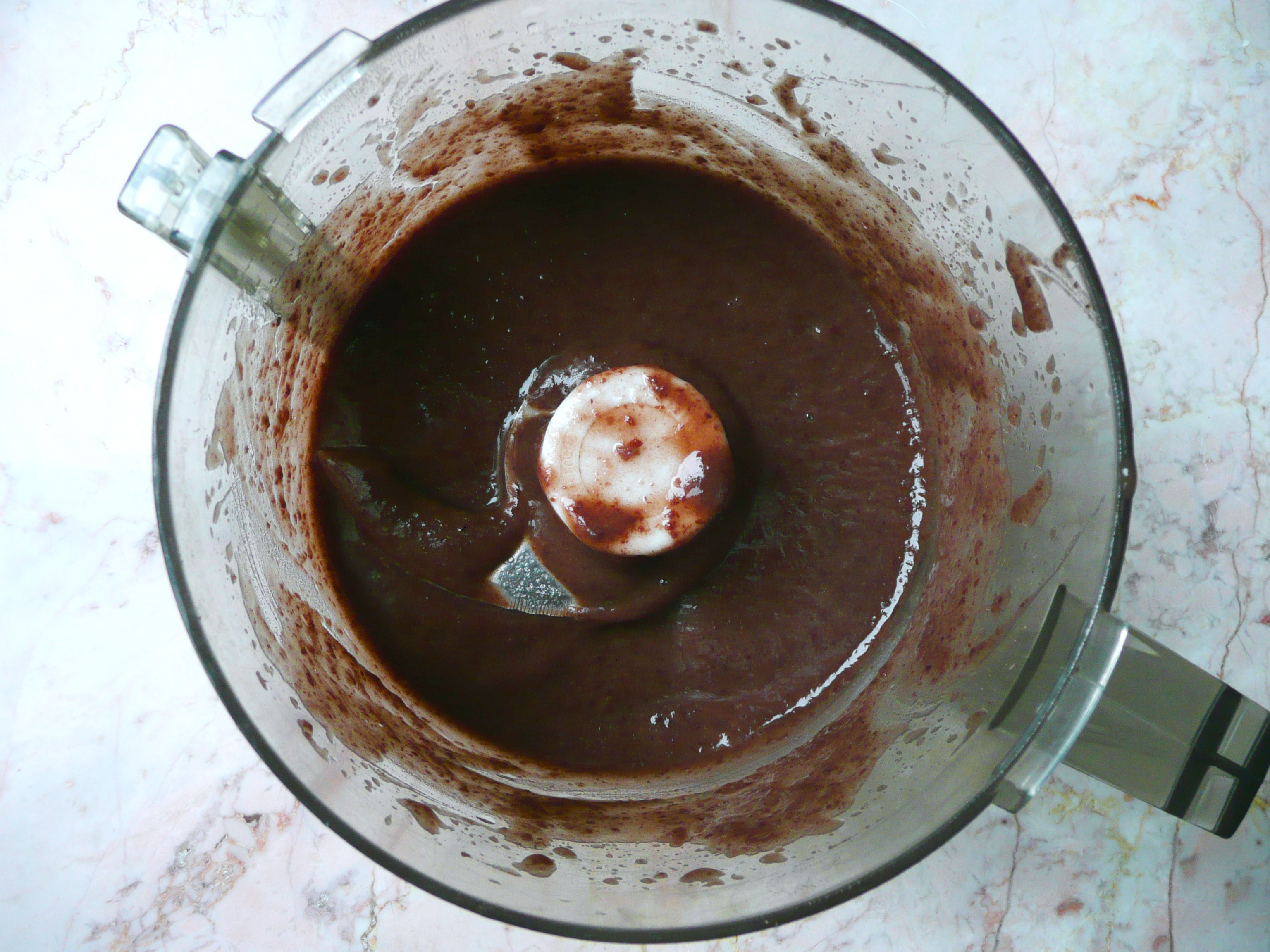
1. Add the drained red beans into a food processor with the 1/8 cup of maple syrup (I know that it doesn’t seem like much sweetener, but it gives just the right amount of sweetness to the tang yuan) and blend until smooth. It will look like this when it’s done.
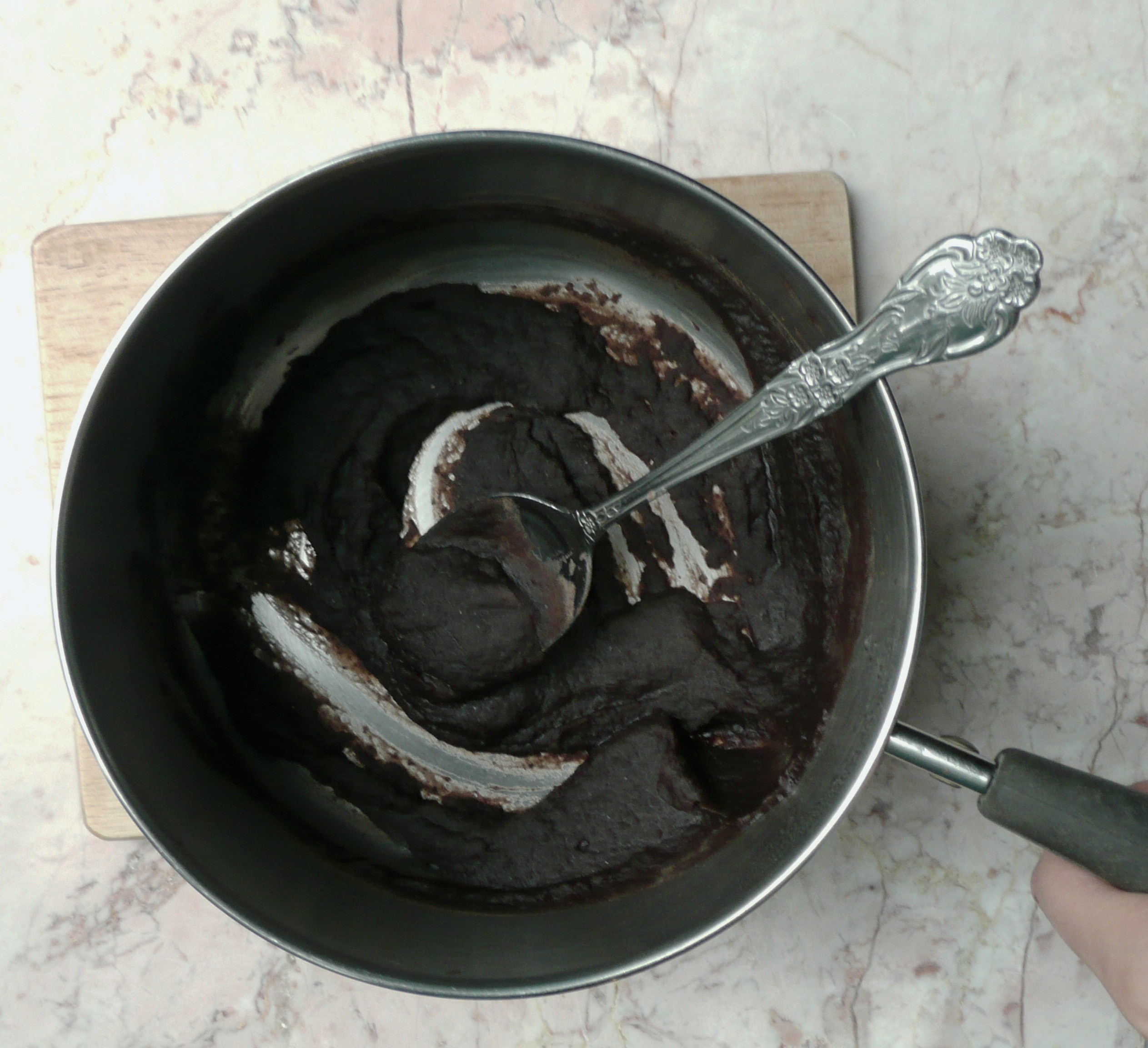
2. Cook the mixture in a small saucepan on medium high for 7-8 minutes, stirring constantly until thickened. It should be a similar texture to jam when you’re done.
3. Take the pan off the heat and allow to cool. The mixture should be reduced to just over 1/3 cup of red bean paste. Lay plastic wrap over a plate, and scoop a 1/2 tsp amount of the red bean paste into your hands and roll into a ball. Place the ball on the plate and repeat until you use up all the red bean paste. You should get about 12 little balls of paste in total. Cover lightly with plastic wrap and freeze for at least 1 hour until solid.
4. When the red bean balls are frozen solid, add the warm water to the sweet rice flour and stir with a fork until a shaggy dough is formed. Knead the dough together with your hands for 1-2 minutes until smooth.
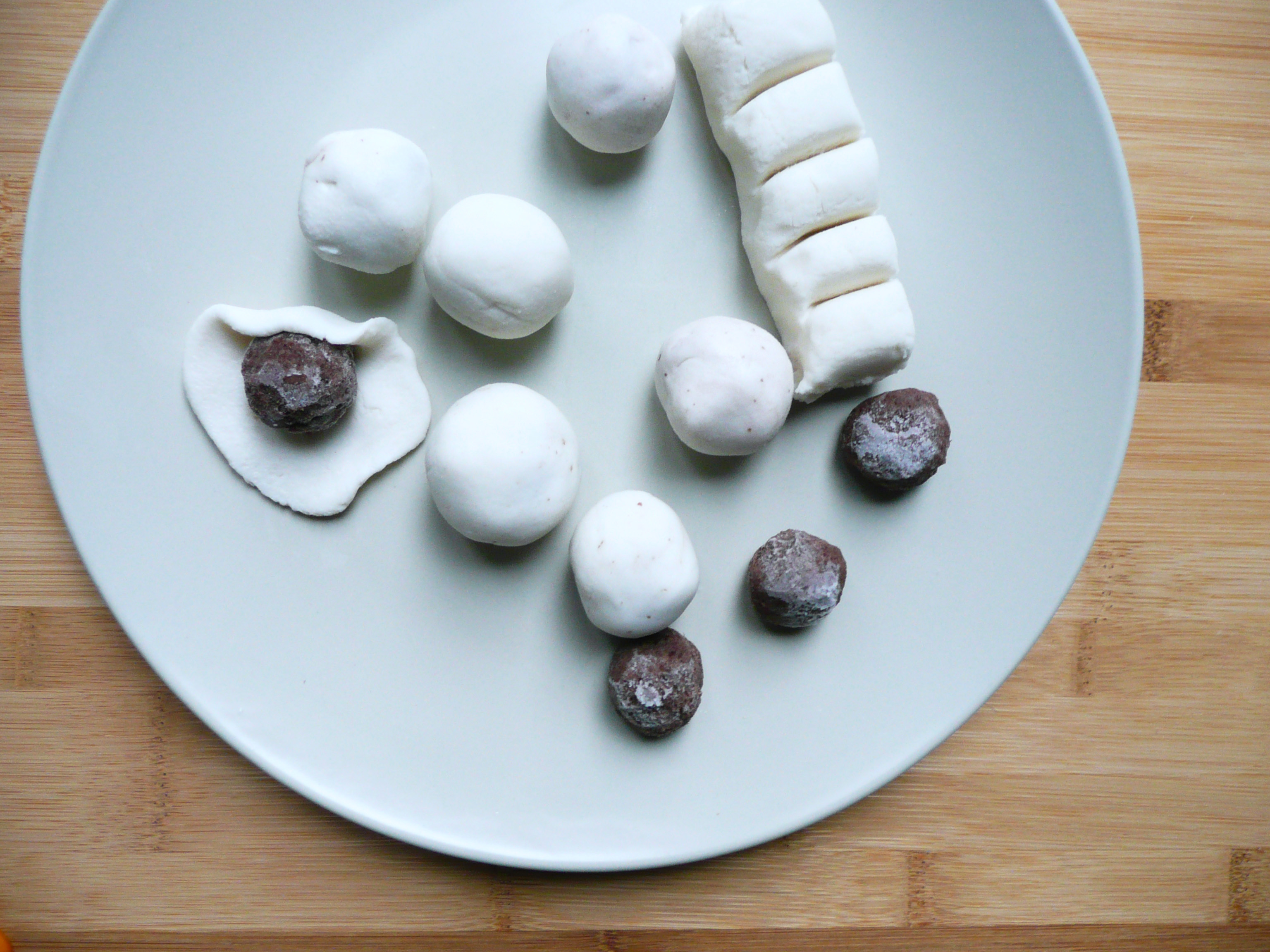
5. Divide the dough into 12 pieces and keep the pieces of dough that you’re not working with covered with plastic wrap so that it doesn’t dry out.
Take the red bean paste balls out of the freezer. If you’re working with a double or triple batch, take about 12 red bean paste balls out of the freezer at a time, that way that don’t defrost before you cover them in the dough. It’s much easier to wrap the red bean paste in the dough if the red bean paste is frozen solid.
Wet your hands, and flatten each piece of dough into a small disk in your hand and pinch and fold the dough together to cover the red beans paste and roll until the ball is smooth.
If you’re a visual learner, this video shows how it’s done starting at the 2:30 min mark.
The first time I tried covering the balls in the dough, I did it with dry hands and it was much more difficult to work with than when my hands were wet. When I tried it again with wet hands, I made a double batch and only had trouble covering about 4 out of 24 of the tang yuan.
If the dough is too dry, it won’t stick to the red bean paste. You can peel off the dough and knead in a few drops of water before trying to cover the red bean paste again.
If the dough is too wet, it also won’t stick to the ball of red bean paste, but it will stick to just about everything else. In that case, just knead it with your hands for a little bit until it dries out a little and try again. Don’t worry if you can see little flecks of red bean paste on the outside of the tang yuan. No one will notice once they are in the soup.
If you get an air bubble around the red bean paste and the dough is not sticking to the ball, pull all the dough off of the ball, wet your hands, knead it the dough a little and try covering the ball again. This technique works better than trying to squeeze the air out which tends to make the rest of the dough pull away from the ball as well.
Once you’re done rolling the tang yuan, put them onto a plate lined in plastic wrap and cover lightly with another layer of plastic wrap and freeze until solid. Once frozen, transfer the tang yuan into an air-tight container and stash in your freezer until you are ready to cook them.
When you want to cook them, warm up some red bean soup (or you can also eat the tang yuan in the water that you cook them in with a little maple syrup drizzled over for sweetness).
Then bring a pot of water to the boil. Add the tang yuan (cook a few extra in case a few break open while cooking), cover with the lid and turn the heat down to medium low. Let the tang yuan cook until they float (about 6-8 minutes) lifting the lid to check on them occasionally. Once they are floating, put the lid back on and then set a timer 3 minutes let them continue cooking over medium low until the timer goes off.
If some of the tang yuan break open, don’t worry about. Just ladle those ones into your bowl (cook’s treat, you can also ask if anyone else wants the extras) and they will taste just as good as the whole ones.
For the Miniature Tang Yuan – You can also make little (non-filled tang yuan) as well, and those are even easier to make.
Stir together 1/4 cup (45g) sweet rice flour with 1/8 cup warm water (30 g) and knead until smooth. Roll the dough into a long snake and keep cutting the dough in half until you have 32 little pieces of dough about the size of a centimeter. Roll each little piece of dough into a ball and place them on a plate lined in plastic wrap. Over lightly with another piece of plastic wrap and freeze until solid.
The cooking instructions for the little tang yuan (no matter if they are freshly made or frozen) is to bring a pot of water to the boil. Add in the little tang yuan, cover, and set a time for 3 minutes.
When the timer is up, scoop out the little tang yuan with a slotted spoon and add them to the red bean soup. Ta-da! Extra adorableness for Lunar New Year!
To Serve – Ladle the red bean soup into bowls, top with your tang yuan and drizzle over some maple syrup.
What I do when I eat this soup is I’ll drizzle over about 1 tbsp of maple per bowl and don’t stir it in. That way, each time you take a bite you get a little hint of sweetness and you use less sweetener overall in the soup.
I hope that you and your family have a lucky, wonderful, safe and prosperous Lunar New Year!
Red bean soup is a recipe that my family makes often. Red bean is a very popular flavor in Asian desserts (there’s red bean ice cream, red bean filling in mochi, and even red bean popsicles), and I’ve grown up eating this soup all my life.
This soup is a sweet soup that warms you up in the winter, and it goes great with tang yuan, which are a traditional chewy sweet rice balls that signify family togetherness and are eaten at celebrations like weddings, and especially at Lunar New Year.
This soup is normally made with a lot of cane sugar, but I make the soup with maple syrup instead. My trick for using less sweetener when eating this soup is to drizzle about 1 tbsp of maple syrup on top of each bowl, and to not stir it in.
That way each time you take a bite, you get that little hint of sweetness and you end up using less maple syrup overall.
Another good way to cut down the sweetener in red bean soup is to cook the soup in a slow cooker. The beans taste sweeter when cooked this way, and with a few tang yuan and a drizzle of maple syrup, I promise you that you won’t miss the cane sugar version because this one is amazing.
If you need to cook red bean soup in a hurry, you can do this on the stove top in about 1 – 1 1/2 hours. The texture of the beans won’t be quite as soft and tender as the slow cooker red bean soup, but the stove top version will still be very good.
If you’re expecting to serve this to more than 6 people for Lunar New Year, I recommend making two batches of this soup. If you have extra, you can send it home with people and everyone will be extra happy for Lunar New Year.
Sweet Red Bean Soup Recipe
Makes 4 – 6 servings (if you use some of the red beans to make tang yuan, 6-8 servings if you don’t).
Ingredients
1 lb Adzuki Beans (aka Red Beans, preferably organic)
10.5 cups of filtered water
– maple syrup for serving
Instructions
Slow Cooker Directions
1. Give the beans a good rinse. Add them to a large pot and cover them with 1.5 inches of cool filtered water. Bring the beans to a boil, then set a time for 2 minutes and let the beans boil until the timer goes off.
2. Drain the beans and add them to a slow cooker along with 10.5 cups of filtered water. Cover, and let the beans cook on high for 9-10 hours until the beans are very soft and tender.
Stove Top Directions –
1. Give the beans a good rinse. Add them to a large pot and cover them with 1.5 inches of cool filtered water. Bring the beans to a boil, then set a time for 2 minutes and let the beans boil until the timer goes off.
2. Drain the beans and add them back into the pot along with 10.5 cups of filtered water. Cover, bring the beans to a boil again, then turn the heat down to medium low and let the beans cook covered for 1 – 1 1/2 hours until the beans are soft. Give the beans a stir every now and then, and if the water looks a little low, add a little more water. The soup is done when you can easy smush a bean between your thumb and forefinger.
If after an hour and a half of cooking the beans are still firm (older beans sometimes take longer to cook) turn the heat up to medium and cook for another 30-45 minutes and the beans should be soft by then.
Green onions are used in lots of Asian recipes, and they are actually super simple to regrow on your windowsill from the trimmings that you would normally compost.
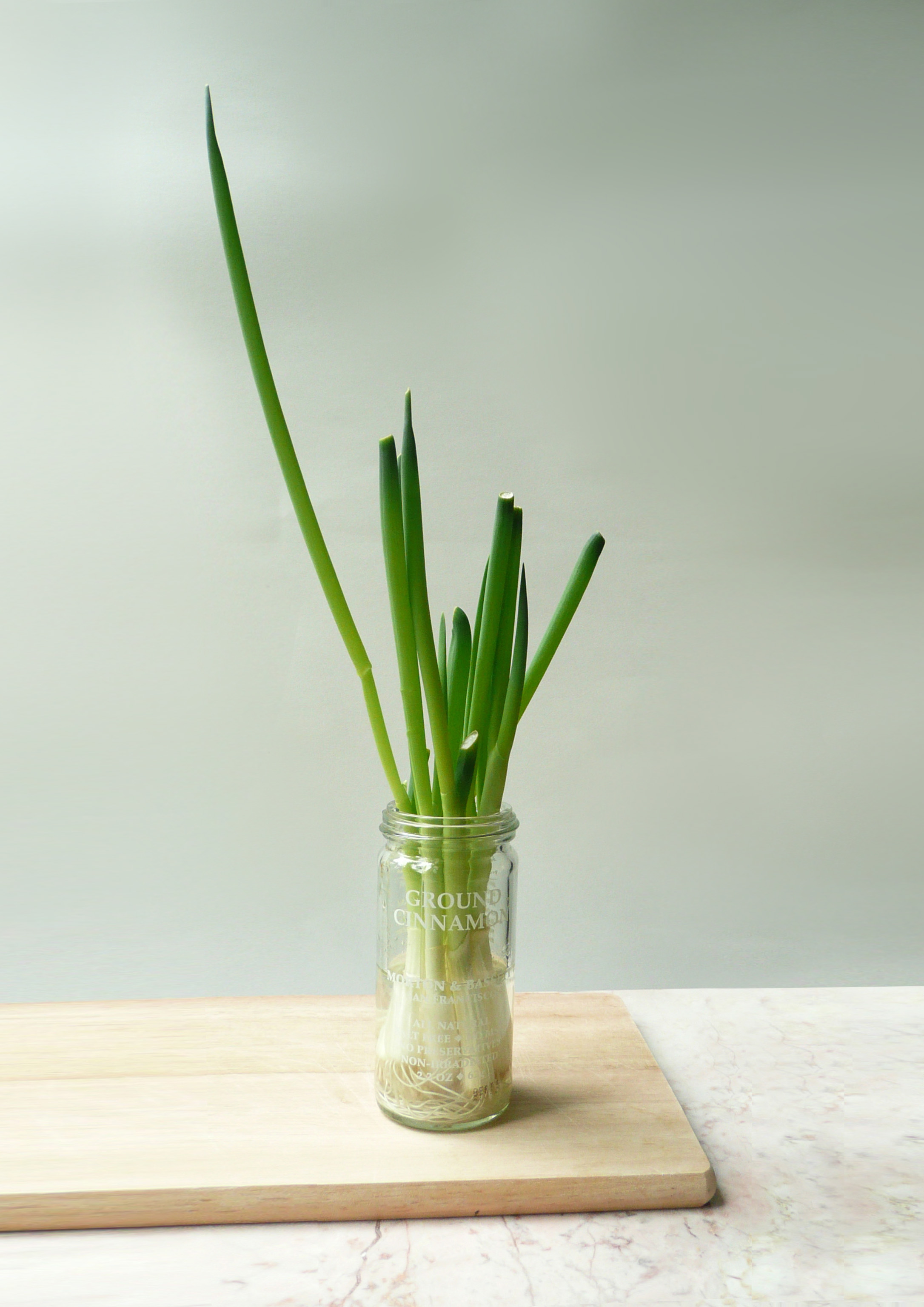
I cut the green part off the green onions so that there’s about 1.5 – 2 inches of the white part attached to the roots. Then put the green onion roots in a little jar (old spice jars seem to work well for this) and add about 1.5 inches of cool water into the jar. I put a little piece of folded paper towel under the jar when I put it in the windowsill so that no watermarks stain the wood.
Replace the water everyday (that way the water doesn’t get slimy as quickly). I’ve been able to successfully regrow a trimmed green onion root about 2-3 times. After that, they get a little too slimy around the roots and it’s time to compost them and wash out the jar.
The picture shows about a week of growth, and you can trim off what you need to add to dishes.
You can also plant the trimmed green onion roots in some soil, and they should regrow a few more times than if they were simply regrown in water.
I hope that this tip helps you save a little money! Let me know how this trick works for you. What would you make with your regrown green onions?
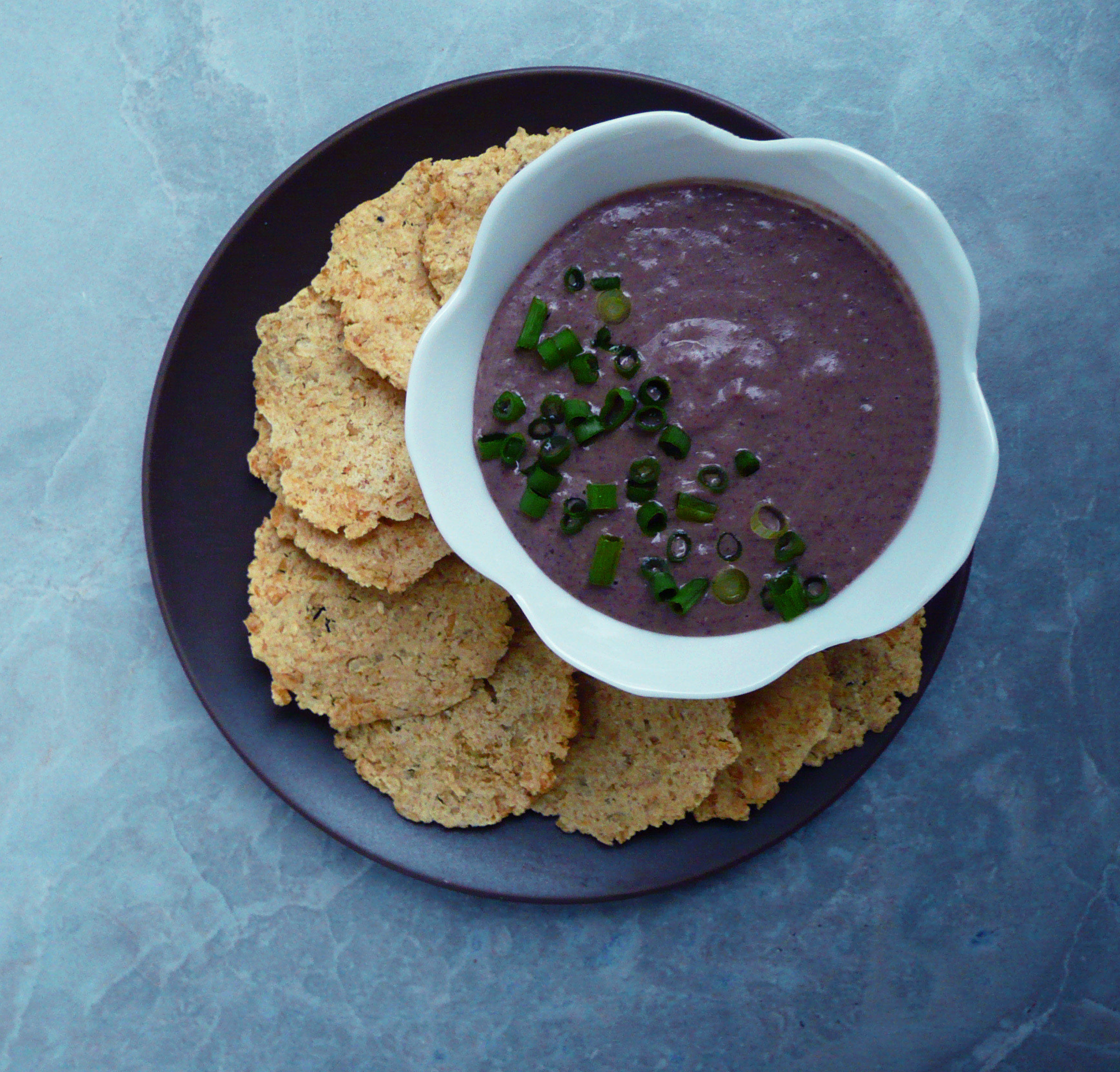
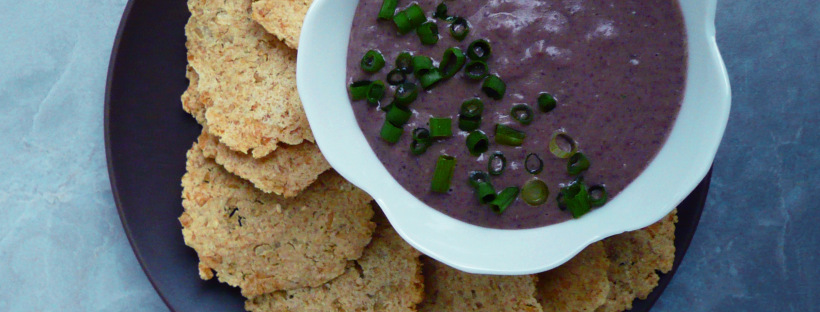
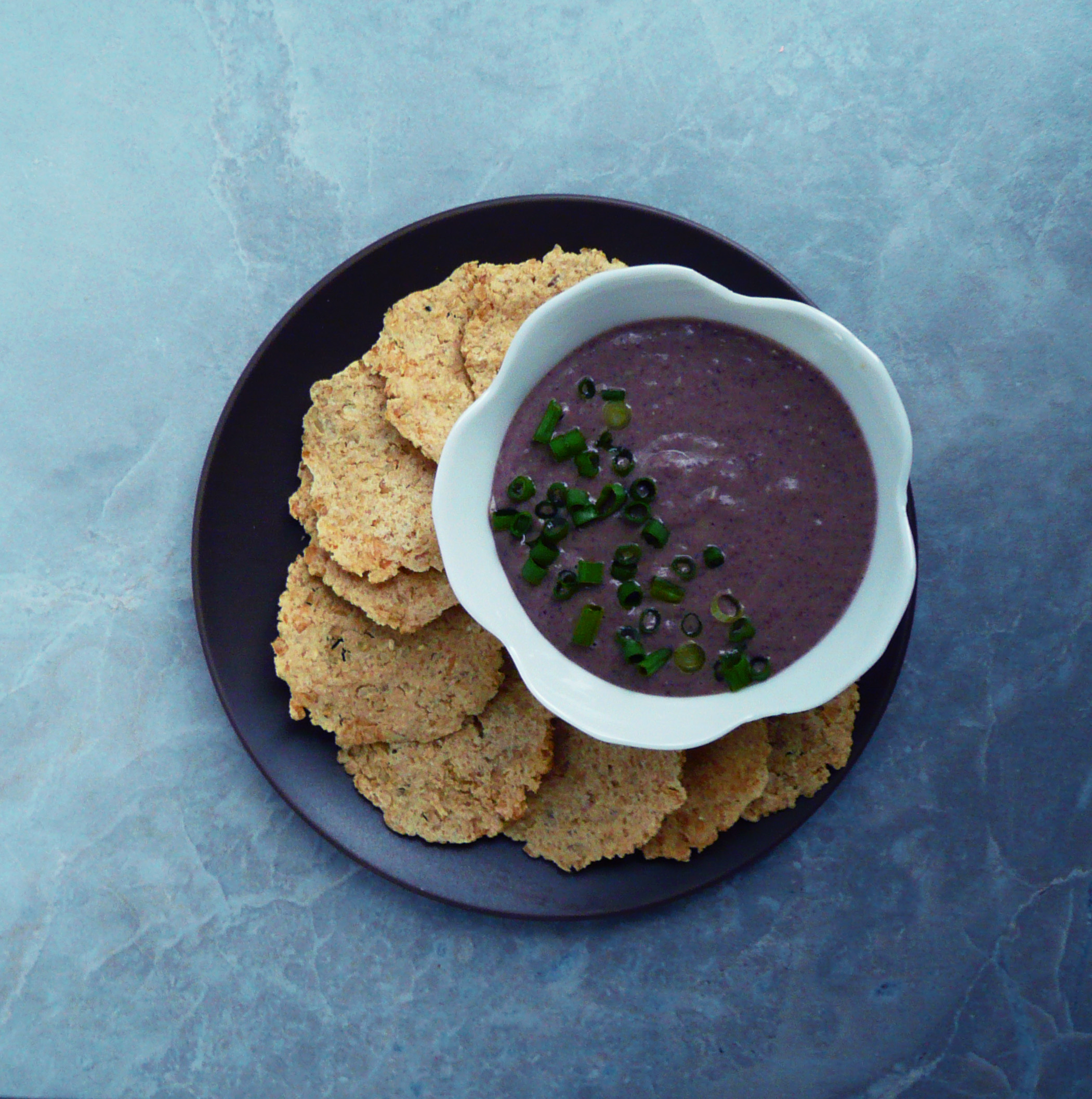
I love hummus, and this dip originally started out as a black bean hummus, but I kept adding more lemon juice and more green onions until it became something slightly different, something even better.
It’s thinner than store bought hummus, but still wonderfully creamy and has an incredibly bright happy flavor from the lemon juice, which works well with the flavors of the garlic and green onion (which sort of prance around in the background and bring even more joy to the party).
It’s better if you make it a day ahead, that way the lemon juice will mellow out the sharp flavor of the garlic and the dip will be extra delicious.
I hope that you give this dip a try!
Creamy Lemon Garlic Black Bean Dip
Makes about 2 -3 servings
Ingredients
7 tbsp + ½ tsp fresh lemon juice
3 cloves fresh garlic
1 can black beans, drained
4 tbsp. + 1 tsp olive oil
4 tbsp finely chopped green onion
1/2 tsp sea salt
1/8 tsp black pepper
Instructions
Add all ingredients to a food processor and blend until smooth.
If you like things more lemony you can add another 1 tbsp of lemon juice, or more to taste.
Transfer the mixture into a bowl, cover with a lid or plastic wrap and refrigerate overnight.
Serve with tortilla chips or cut veggies, and if you’d like you can sprinkle over some finely chopped green onion for color and extra crunch.
When I first went gluten free I really missed having something crunchy to dip into hummus, or top with egg salad like a cracker.
When I came up with this recipe I found that it checked lots of carb-y, crunchy boxes.
You can eat these chips with guacamole or hummus. You can mix flax seeds and chia seeds into the dough to make multigrain crackers. For cheesy herby crackers, you can add some granulated garlic, parsley, oregano, and nutritional yeast into the dough and they bake up a treat.
Another thing that you can do with this dough is make tostadas. The tostadas bake up super crunchy and you can top them with anything that makes your heart happy.
I tried making tortilla chips and crackers in all kinds of ways before I came up with this recipe, but it turns out that leftover brown rice was the key to making a great crunchy oat flour tortilla chip.
If you have leftover brown rice in the fridge, this is a perfect way to use it up. Making these chips / crackers are also so much cheaper than buying gluten-free crackers in the store, and I promise that they taste so much better. And if you can’t tolerate corn chips, this recipe is a great alternative. These chips also go great with my creamy lemon garlic black bean dip.
Brown Rice and Oat Flour Tortilla Chips (Baked)
Makes 10 chips (about 1 generous serving)
Ingredients
1/3 cup cooked short grain brown rice
1/3 cup oat flour
½ tsp olive oil
pinch of salt
1 -1 ½ tsp water
Instructions
1. Preheat the oven to 350 F.
2. Add all the ingredients into a bowl and mash the brown rice into the oat flour with the back of a fork. Squeeze the mixture together in your hands so that the rice incorporates into the oat flour and forms a nice dough. If the dough feels a little dry, add a little water to the dough. If the dough feels too sticky, add a little more oat flour.
3. Divide the dough into 10 equal sized pieces and roll each piece of dough into a ball .
Wet you hands lightly press each ball of dough into a 1/8 inch thick disk onto a silicone baking mat. The mixture won’t spread so the chips can be baked close together as long as they don’t touch.
4. Bake for 15 minutes, then take the chips out of the oven and use a spatula to flip over each chip. Bake for another 15 minutes until crisp.
Let them cool on the silicone baking mat for about 10-15 minutes. They will crisp up even more as they cool.
You can also use this same mixture to make about 3 tostadas about 4-5 inches in diameter (1/8 inch thick). Bake the tostadas for 15 minutes per side at 350 until crisp.
One ingredient that I use almost everyday is olive oil.
I use it in salad dressings for it’s peppery bite, drizzle it over soups and pasta sauces to give them richness, and add it to hummus for a smooth and silky texture.
Inevitably, at some point, the bottle runs empty save for a few teaspoons of that beautiful green oil that you can never seem to shake out of the bottle.
If you too can’t stand the thought of letting any food go to waste, this is my solution for getting every last drop of precious oil from the bottle.
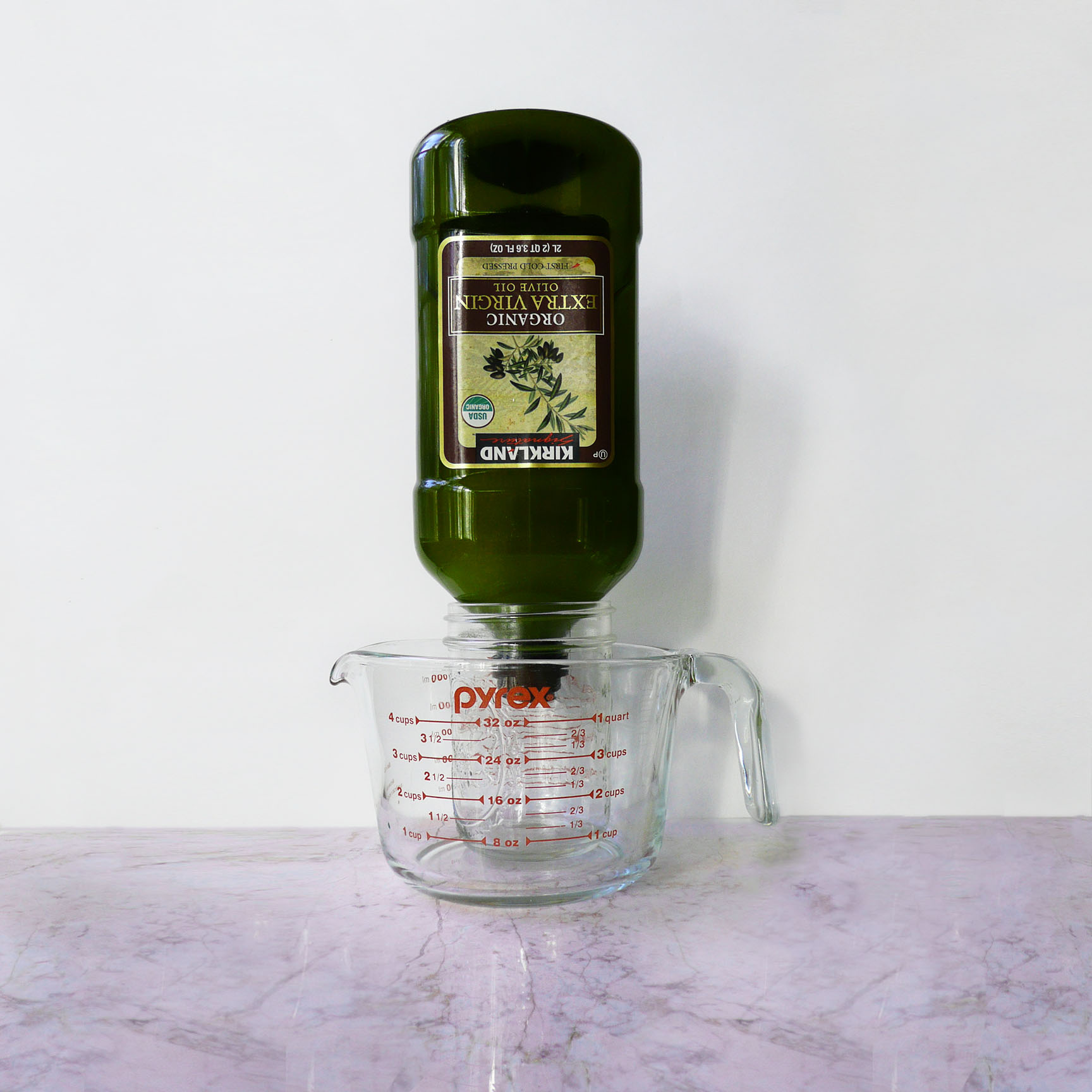
Take a wide mouth mason jar and put it inside of a 1 quart measuring cup. Then turn the bottle of oil upside down and place the mouth of the bottle inside of the mason jar. Leave this to sit in an area where it won’t be disturbed for a day or two and all of the oil that’s left over in the bottle should drain into the mason jar.
(Putting the mason jar inside of the big measuring cup makes the bottle of oil and mason jar less likely to tip over.)
Use this reclaimed oil within a day or two, as it has been exposed to air and light and won’t keep for too long before oxidizing.