
salmon sushi

Salmon Salad Sushi – Super Easy

P1080078-2

I love tuna salad, and this is a slightly fancier version but is still super simple to make. It’s perfect for a quick dinner, or an easy snack and you can use up your leftover brown rice or salmon to make this tasty dish.

Salmon Salad Sushi

Makes 8 pieces (2 snack size servings, or 1 serving for a hungry person)

Ingredients

1/3 cup cooked flaked salmon (canned salmon is fine too)

2 ½ tbsp. mayo (I used an avocado oil mayo)

1/8 tsp dijon mustard

2 ½ tsp finely chopped green onion

3 tsp lemon juice

tiny pinch of pepper

¼ tsp dried parsley

1/8 tsp granulated garlic

¼ tsp sea salt

1 ½ cups warm cooked brown rice (I just steam it for a few minutes in the rice cooker to warm it up if it was in the fridge)

1 sheet of nori

Instructions

1. Stir together the salmon with everything but the rice and nori.

2. Lay the nori sheet on a plastic wrap covered bamboo mat.

Wet your fingers, and spread the warm rice on the nori into a thin layer leaving about a ¾ inch of nori uncovered at the top of the sheet.

3. Spoon the salmon salad into a line at the bottom of the rice covered nori. Roll firmly into a sushi roll, and set in the fridge for 10 – 15 minutes to firm up. Cut into 8 slices and serve.
P1080077-2

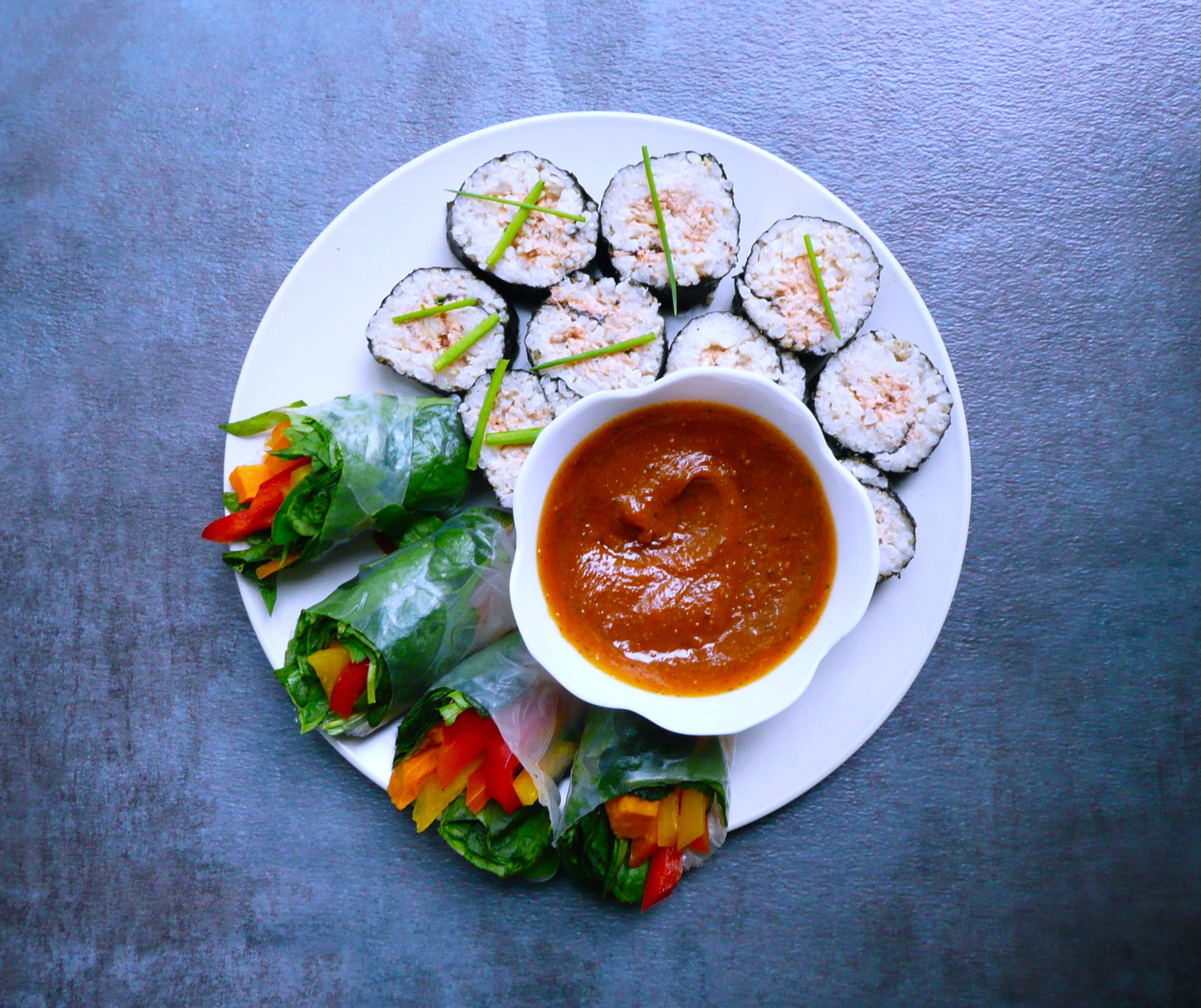
Salmon Salad Sushi and Vegan Thai Peanut Sauce with Veggie Spring Rolls

The snack plate of dreams…
frozen lemons

What To Do With Leftover Lemons – How To Freeze Lemons

P1060487- edit 2

Lemons tend to be expensive. A single organic lemon can cost in the neighborhood of $1.30 – $1.70 depending on the store, so it’s usually a cheaper option to buy the 2 lb bag of organic lemons for about $5 instead.

This means that I usually end up with a bag of lemons when I only needed 1 or 2 of them.

If you’re ever in this pinch and trying to figure out what to do with the rest of your lemons before they go bad, then freezing them is a really good option.

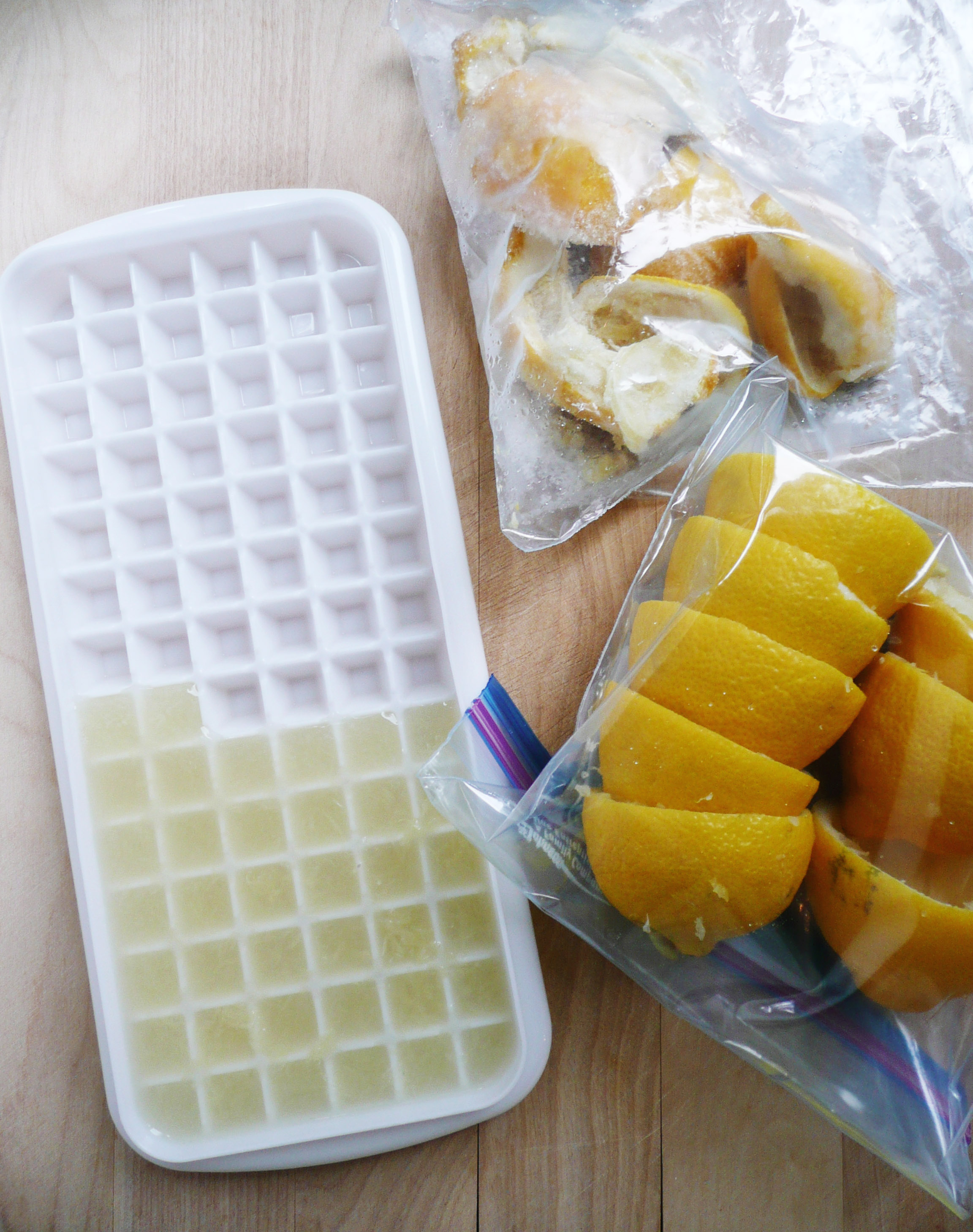
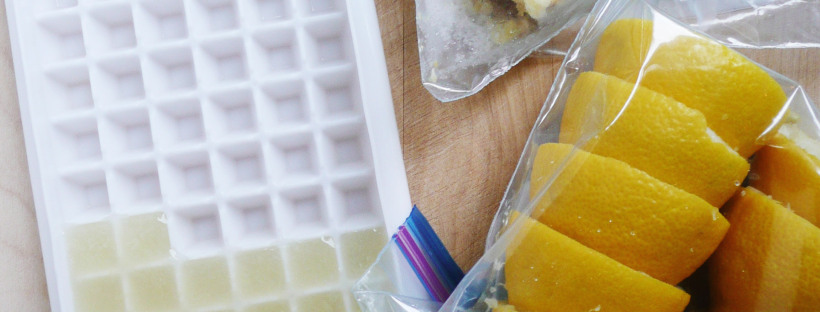
I wash the lemons, then juice them and pour the lemon juice into an ice cube tray. Once frozen, pop the lemon juice cubes into a zip top bag and stash them in your freezer until you’re ready to use them. The lemon juice cubes melt quickly and are a great way to always have lemon juice always on hand. I used an ice cube tray from daiso, which just happens to make smaller ice cubes, but a normal ice cube tray will work just as well.

I add the lemon juice cubes to tea, or to chicken soup with brown rice and quinoa, or quinoa tabbouleh.

You can freeze the lemon rinds as well in a separate zip top bag, and grate them from frozen on a microplane to add lemon zest to your dishes.

When I have a cold, I’ll toss a few of the frozen lemon rinds into a pot and boil them with some water, ginger, turmeric, black pepper, a tablespoon of coconut oil, and honey for a soothing tea.

However you use your frozen lemons, I hope that this trick brings you many happy lemony dishes!

fresh herbs

How to Store Fresh Herbs

P1060471-2

When I used to buy herbs, I always seemed to buy more than I needed. If I recipe called for 2 tbsp of fresh parsley, I never seemed to know what to do with the rest of the herbs, or how to keep them from wilting before I could use them up.

After much experimentation, I throw away way fewer herbs now.

Here is how to keep your herbs fresh –

For Parsley or Cilantro

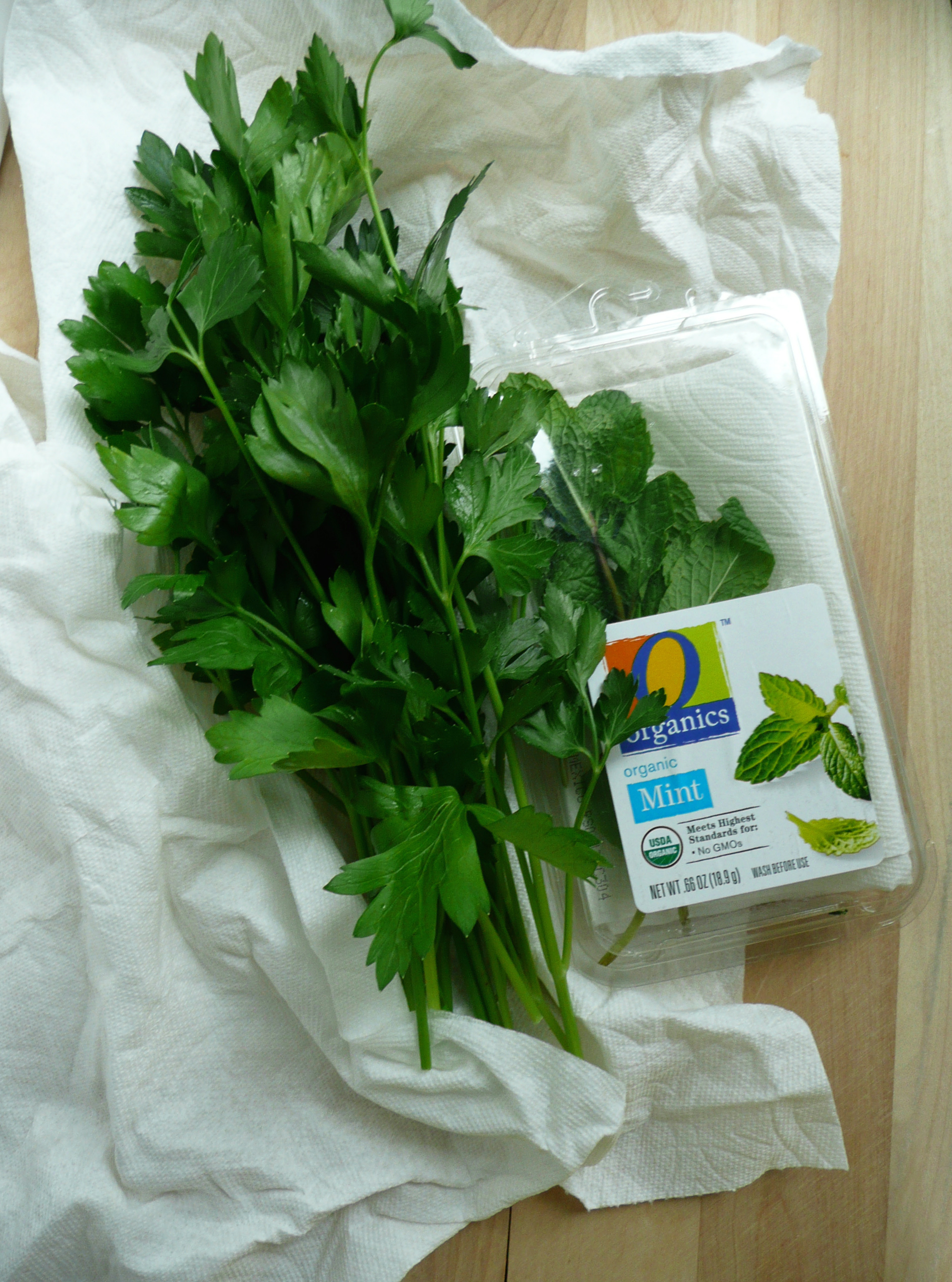
When you get home from the grocery store, take the rubber band off of the bunch of herbs. Pick out all the wilted sprigs, then loosely roll the bunch of herbs in a few sheets of paper towel. Place the roll back inside of a closed ziploc bag and place in the fridge.

Every few days, take the herbs out of the refrigerator, pick out the wilted sprigs and roll the non-wilted herbs in a few new sheets of paper towel. Compost the old paper towels and your herbs will probably keep for at least a week. Make sure you put them in a spot in your fridge where they won’t accidentally get frozen.

Quick ways to use up Parsley – blend your extra parsley into a pesto with some garlic, almonds, olive oil, salt and pepper. You can also add in kale, or basil, or cilantro to the pesto if you like. Tabbouleh is a great dish to make with excess parsley, and I’ll be posting a recipe for Quinoa Tabbouleh soon.

You can also blend a handful of the parsley with an apple, lemon juice, honey, ginger, water, and blueberries for a smoothie that helps with inflammation and joint pain.

Quick ways to use up Cilantro – you can make pico di gallo with chopped onions, tomatoes, lime juice, salt, and freshly chopped cilantro.

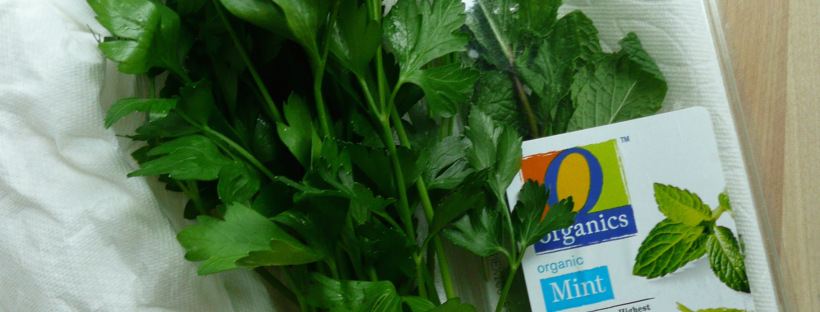
For herbs in clam shells – pick out any wilted stems and leaves, then fold 1-2 paper towels so that they will fit inside the container. Take the herbs out the clam shell, place the folded paper towel on the bottom of the container, put the herbs on top of the paper towels and close the clam shell and place it in your fridge.

Every few days, take the herbs out, pick out the wilted bits, and replace the paper towel before placing it back in the fridge. The herbs should last a few days longer using this technique.

Quick ways to use up Mint – You can add extra mint to tabbouleh, or make a great tea with it. I like to drink mint tea in the morning as it wakes you up without caffeine, and it has a naturally sweet flavor, so you don’t need to add any sweeteners.

I usually add about 7 mint leaves and 2 mint stalks to 1.5 cups of hot water and let it steep for at least 3 minutes before drinking. I leave the mint in the tea as I drink it, but you can remove them from the cup if you like.


Kitchen Tips – How To Use Every Drop Of Olive Oil

P1070675

One ingredient that I use almost everyday is olive oil.

I use it in salad dressings for it’s peppery bite, drizzle it over soups and pasta sauces to give them richness, and add it to hummus for a smooth and silky texture.

Inevitably, at some point, the bottle runs empty save for a few teaspoons of that beautiful green oil that you can never seem to shake out of the bottle.

If you too can’t stand the thought of letting any food go to waste, this is my solution for getting every last drop of precious oil from the bottle.

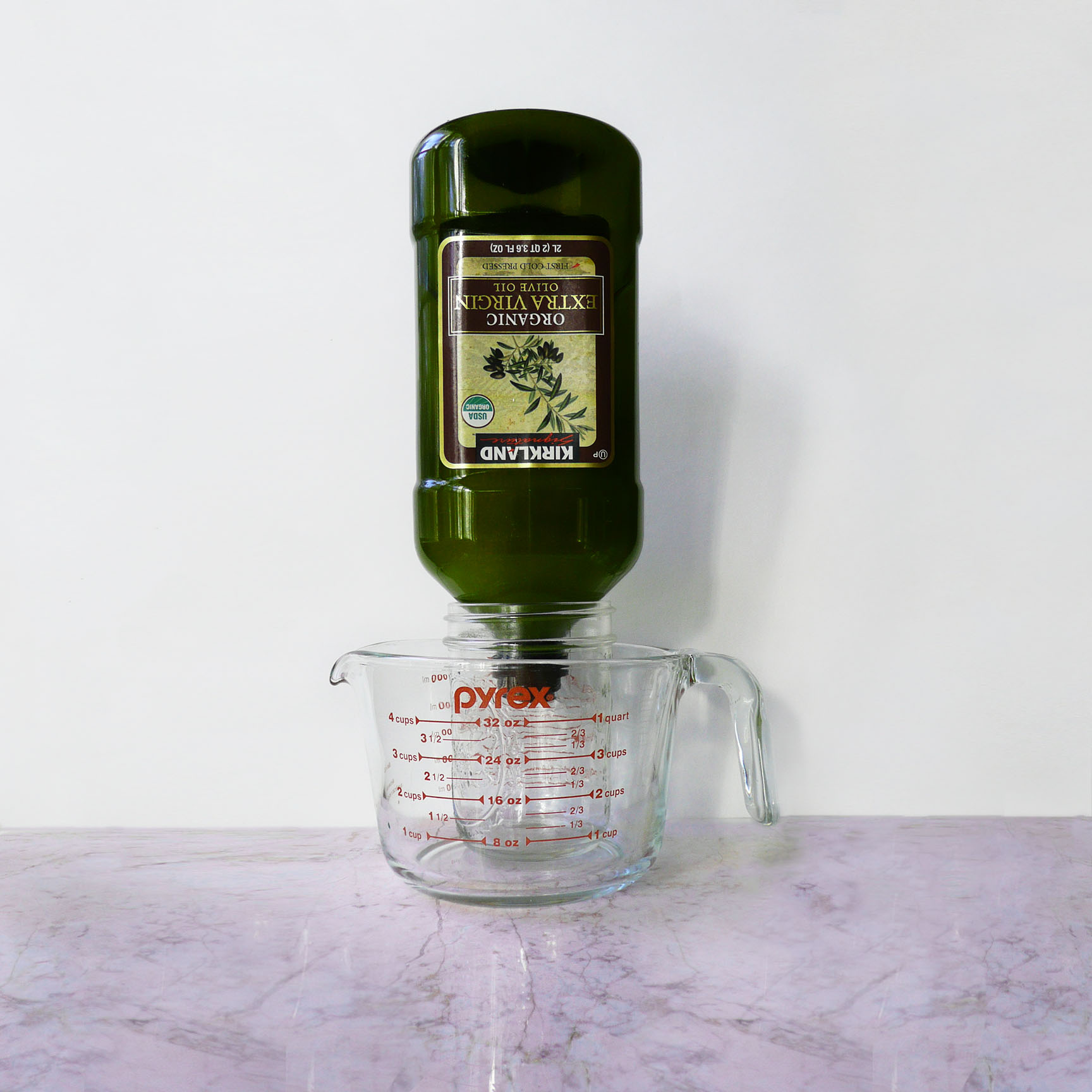
Take a wide mouth mason jar and put it inside of a 1 quart measuring cup. Then turn the bottle of oil upside down and place the mouth of the bottle inside of the mason jar. Leave this to sit in an area where it won’t be disturbed for a day or two and all of the oil that’s left over in the bottle should drain into the mason jar.

(Putting the mason jar inside of the big measuring cup makes the bottle of oil and mason jar less likely to tip over.)

Use this reclaimed oil within a day or two, as it has been exposed to air and light and won’t keep for too long before oxidizing.

Thanks for reading!

Happy Cooking!

baby spinach

How to Keep Baby Spinach Fresh for Longer

baby spinach

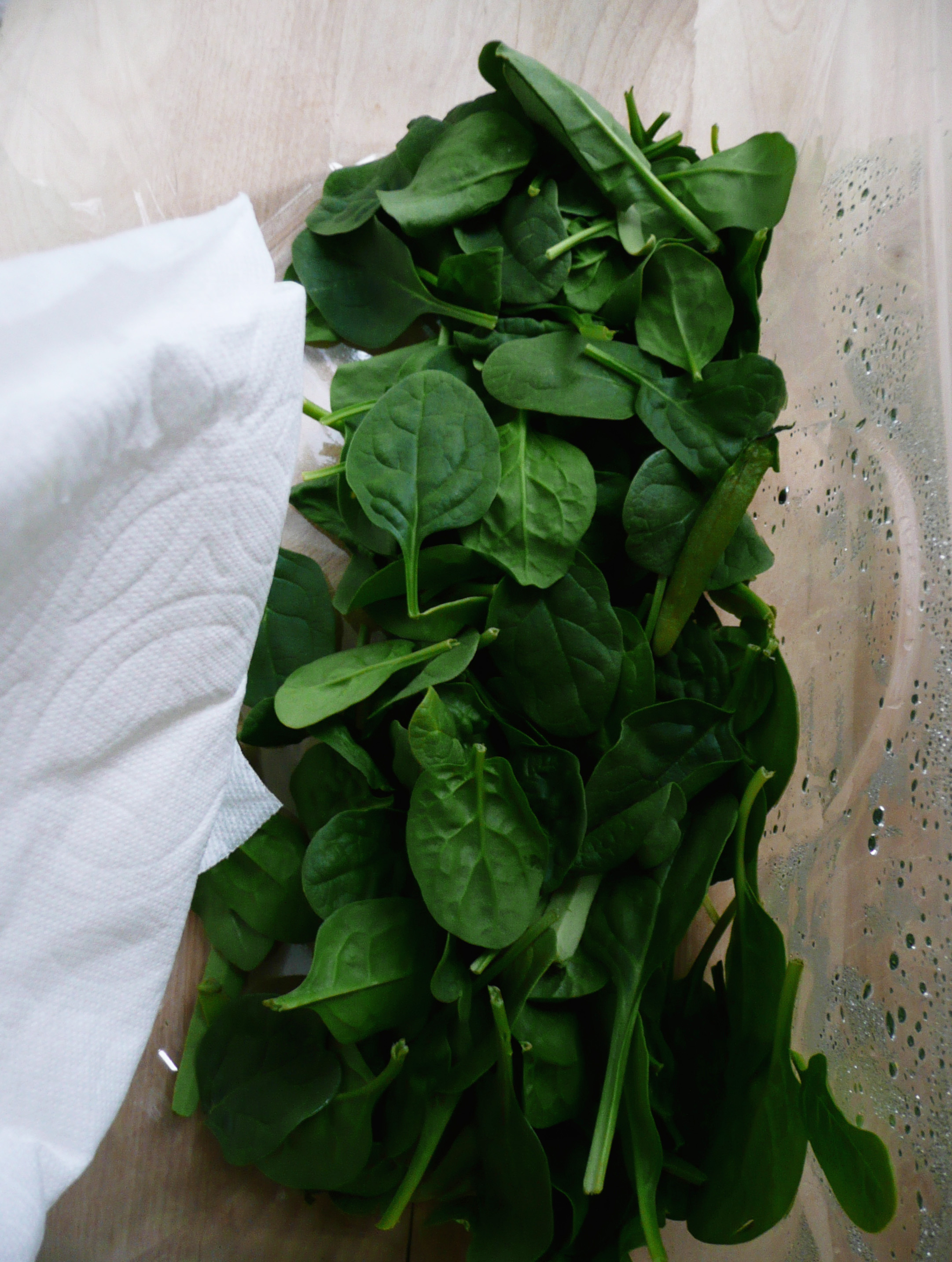
These days, most baby greens come prepackaged and washed in those plastic clam shells at the supermarket. They are super convenient, but the greens seem to always spoil quickly. As it turns out there is a very easy fix for this.

When you open the package, take 2-3 paper towels, fold them in half, and lay them on top of your greens before you close the lid and put them into the fridge. The paper towels absorb the excess moisture that can cause your greens to wilt more quickly. Every few days, check to see of the paper towels are damp. If they are, just replace them with new paper towels, and compost the used ones.

These baby spinach leaves really have been in my fridge for 2 weeks (that’s why the box is so empty, I’ve eaten most of it). This trick works great!

Different greens will have different shelf lives, even if you use this trick. Spring mix doesn’t last as long as the baby spinach does, but this will still work for that as well. This works very well for romaine lettuce, as it’s a sturdier lettuce.

I think that I’m going to post a new recipe every Saturday from now on. Occasionally I may write additional posts other days of the week. I have a number of tips for how to keep food fresh, and how to freeze foods that can spoil quickly, and I’m really excited to share those with you as well.

Please feel free to comment below, and let me know if this trick works for your lettuce too! I think that this must have saved me a small fortune (in baby greens) by now, and it feels great when you can make the most of the ingredients that you have.


Frozen Celery

What To Do With Leftover Celery

P1060566

I don’t often cook with a lot of celery, and I always seem to have some leftover this time of year after making stuffing and gravy.

Instead of letting it languish in the back of your fridge (until you have to throw it away) you can freeze it and use it in future dishes. There are just two things you need to remember with frozen celery.

1. Don’t let it defrost before cooking with it or it will brown. Add it straight from the freezer to the pan. It’s still edible when it turns brown, just not so pretty. If you need to dice the frozen celery further before cooking, try and do it quickly so that the celery doesn’t have time to defrost before it hits the pan.

2. You can use frozen celery in any recipe that calls for cooking celery, it’s not so great in recipes that call for raw celery (like potato salad) because frozen celery will lacks the color and crunch of fresh celery.
I’ve even used frozen celery to make dairy and gluten free clam chowder and it came out great.

You can also add some frozen celery to a pot with some diced onion, sliced carrot, leftover chicken, broth and cooked brown rice or gluten free noodles for a quick and tasty chicken soup. Its also great in minestrone or other vegetable soups.

Directions

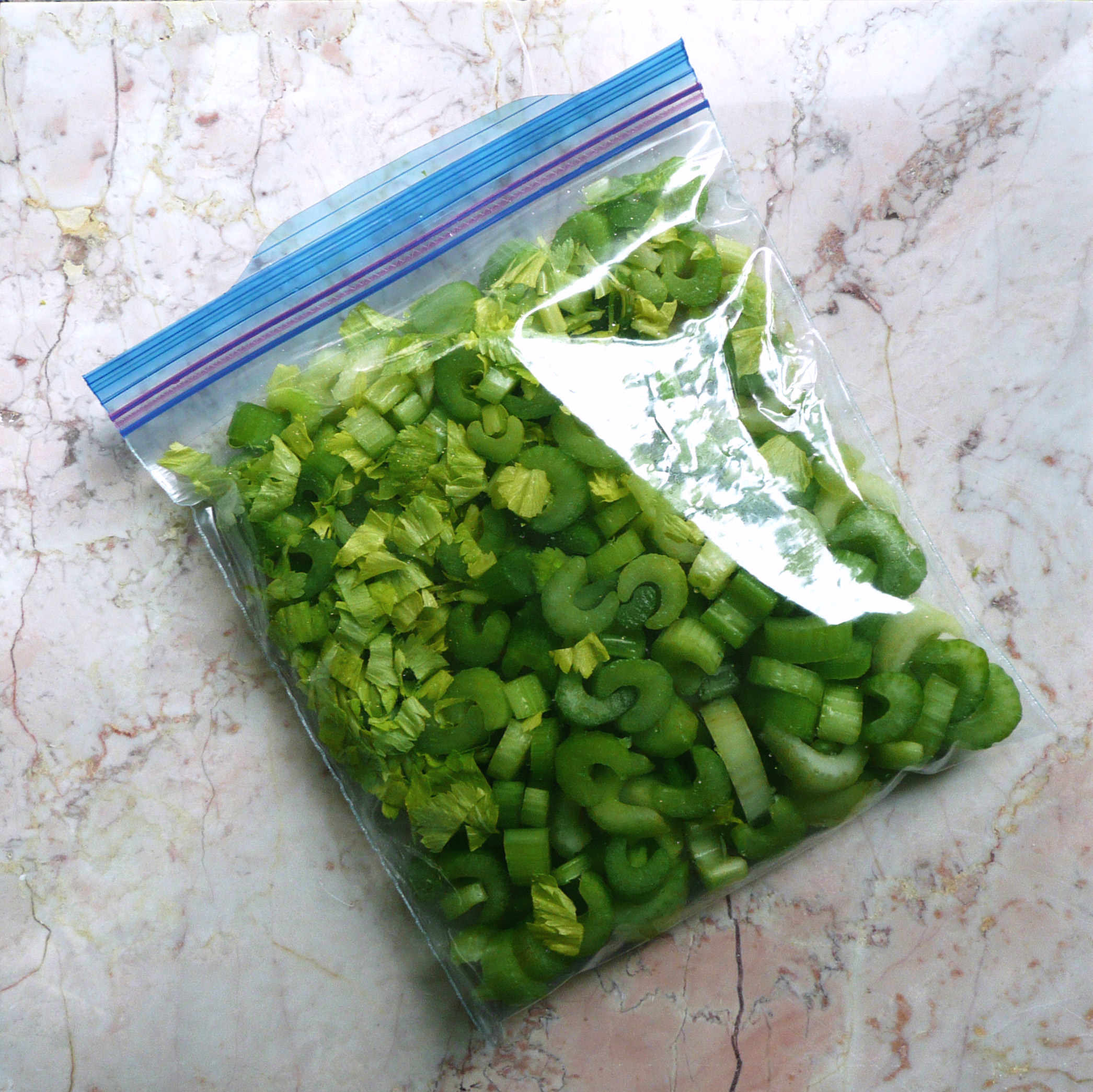
1. Wash and slice the celery into ½ inch thick slices. They look like beautiful little crescent moons this way, and the size makes it easy to add to recipes. I also love when little bits of chopped celery leaves peeking out of dishes because they make any dish a little prettier and cheerier.

2. Place the celery into a Ziploc bag and freeze flat.

When you want to use the celery, just break off as much celery as you need in the recipe and put the rest back into the freezer. Ta da! No more wasted celery!